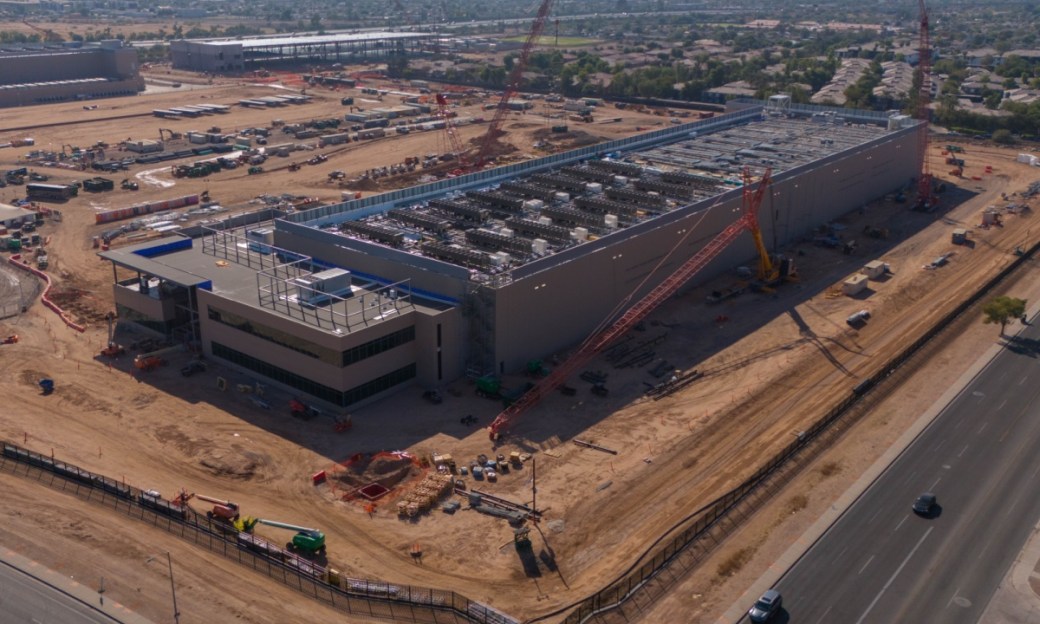
Investors pushed AI-related stocks higher after reviewing Anthropic’s IPO filing and finding evidence that demand for AI infrastructure and services remains durable. CoreWeave and other companies benefited as markets regained confidence in continued spending across the AI ecosystem.
5:41 PMMarketWatch93 stories from 10 sources

AI optimism drives markets amid mounting fiscal and policy strains
Day’s Recap
Supporting Articles

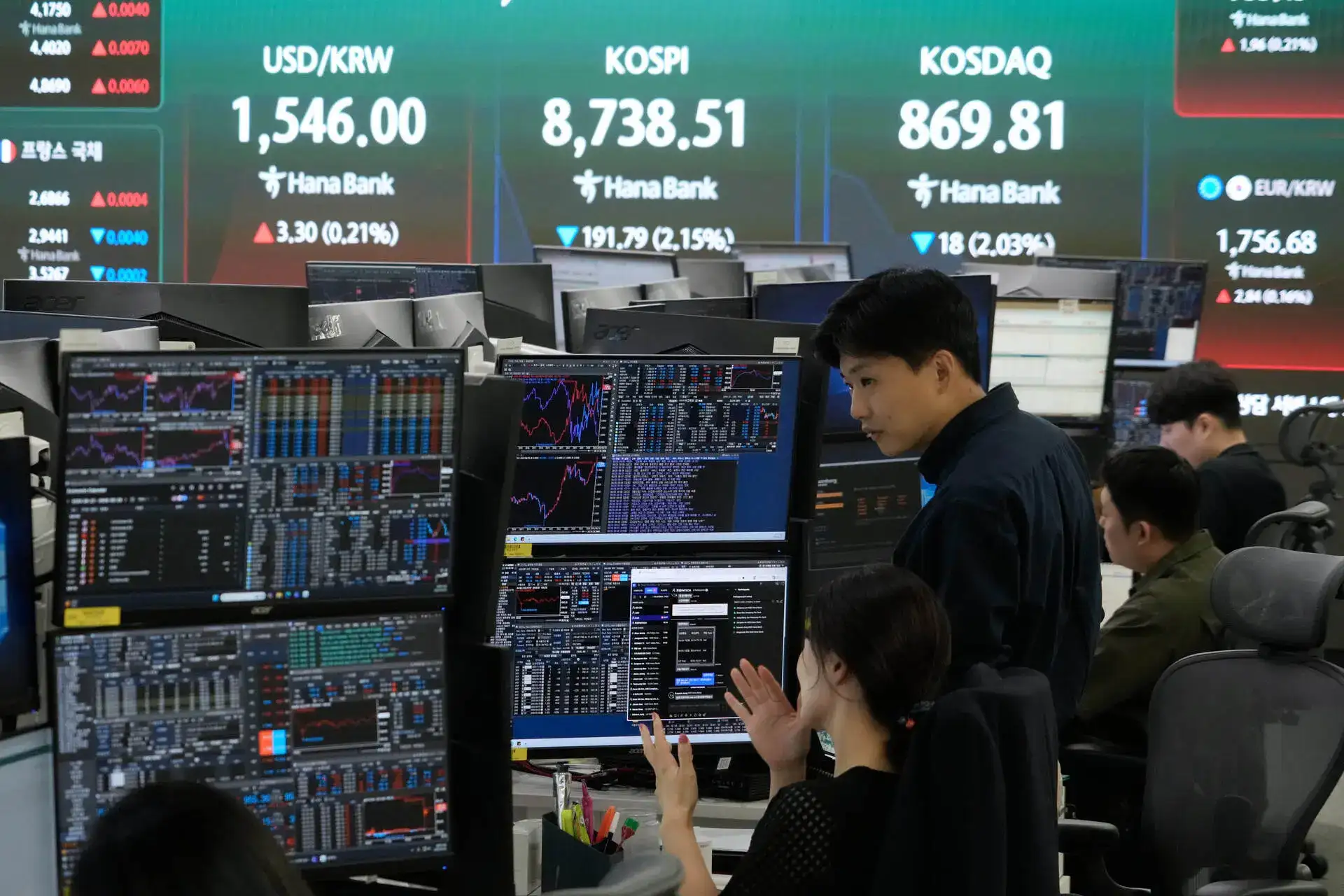
Anthropic’s IPO filing boosted major Asian markets, with South Korea’s KOSPI rising 3.1% and Japan’s Nikkei 225 gaining 1.7%. Hong Kong and mainland Chinese markets declined instead.
4:39 AMFortuneAsian equities advanced, lifting the MSCI Asia Pacific Index by 0.6%, while South Korea's Kospi gained 2.6%. SK Hynix shares rose after the chipmaker beat operating-profit estimates and announced plans for 100 trillion won in shareholder returns in 2026.
8:51 PMEconomic Times
US orders for nondefense capital goods excluding aircraft rose 0.5% in September, supported by demand for AI infrastructure, business equipment and transportation equipment.
12:24 PMPYMNTS
South Korea’s economy grew 3.4 percent year on year, exceeding forecasts as strong semiconductor demand supported growth.
2:50 AMAl Jazeera
Countries closely aligned with Washington have cut their purchases of US Treasuries by 60%, with Asian nations leading the decline. The shift shows that political ties no longer guarantee continued financing of the US deficit.
11:21 PMBloomberg MarketsBond investors doubt that a divided Congress after the midterm elections would substantially improve the US fiscal outlook. Democrats could take one chamber, but likely would not secure enough seats to override presidential vetoes, leaving deficit concerns unresolved.
9:17 PMEconomic Times
Chinese state-linked funds and brokers have stepped up stock purchases as investors pull back from the artificial intelligence trade and domestic markets struggle.
11:54 PMFinancial TimesThe dollar is trading near a two-week high as investors await policy decisions from the Federal Reserve and the Reserve Bank of New Zealand. Markets expect the Fed to hold rates, while the euro and pound remain broadly stable.
10:04 PMEconomic TimesGold rose slightly to $4,061.86 an ounce as investors awaited the Federal Reserve's rate decision and upcoming Personal Consumption Expenditures inflation data. Persistent inflation concerns are keeping demand for the metal supported.
10:02 PMEconomic Times
Investors are preparing for the Federal Reserve's October rate decision as Chairman Kevin Warsh moves away from traditional forward guidance. The shift leaves markets more dependent on incoming economic data and the policy decision itself.
5:18 PMCNBC
The New Zealand dollar suffered its sharpest decline against the Australian dollar since 2017 after the Reserve Bank of New Zealand unexpectedly left interest rates unchanged.
9:50 PMBloomberg Markets
Concerns over the management of Brazil’s economy triggered the currency’s worst trading day in more than 25 years. The market rout has intensified pressure on President Luiz Inácio Lula da Silva to address fiscal credibility.
9:15 AMFinancial Times
U.S. home prices rose 2.1% year over year in August, below the 3.4% inflation rate measured by the consumer price index. Only two metropolitan areas recorded monthly gains, pointing to broadening weakness in the housing market.
4:41 PMHousing Wire
The average price of a new home fell to $400,000 in September, while months of supply edged down to 8.4 despite weaker buyer traffic. The data describe a market with limited momentum and uneven demand.
4:06 PMHousing Wire
The Case-Shiller index rose 2.1% year over year in August, while September new-home sales reached an annualized 676,000. Builder mortgage-rate buydowns continue to support sales, making headline demand stronger than underlying affordability would suggest.
3:15 PMHousing WireCoreWeave and other AI stocks rise as Anthropic restores the market’s faith in sustained spending
Summary
Investors pushed AI-related stocks higher after reviewing Anthropic’s IPO filing and finding evidence that demand for AI infrastructure and services remains durable. CoreWeave and other companies benefited as markets regained confidence in continued spending across the AI ecosystem.
Anthropic’s filing has shifted the debate from whether AI investment can continue to how long
Unlock the full First Pass Analysis to get a better understanding of why this story mattersWhy it matters
Anthropic’s filing is serving as a market-wide test of whether AI spending can become a durable investment cycle.

Anthropic’s IPO filing lifts stocks across Asia—except for China
Summary
Anthropic’s IPO filing boosted major Asian markets, with South Korea’s KOSPI rising 3.1% and Japan’s Nikkei 225 gaining 1.7%. Hong Kong and mainland Chinese markets declined instead.
Investors treated the filing as evidence that AI demand can support broader technology and semiconductor
Unlock the full First Pass Analysis to get a better understanding of why this story mattersWhy it matters
Anthropic’s public-market test is becoming a proxy for how investors value the wider AI supply chain and regional competitiveness.
Global Market Today: Asian stocks advance on resurgent AI optimism
Summary
Asian equities advanced, lifting the MSCI Asia Pacific Index by 0.6%, while South Korea's Kospi gained 2.6%. SK Hynix shares rose after the chipmaker beat operating-profit estimates and announced plans for 100 trillion won in shareholder returns in 2026.
The latest rally combines renewed confidence in AI-related demand with stronger-than-expected semiconductor earnings. SK Hynix's
Unlock the full First Pass Analysis to get a better understanding of why this story mattersWhy it matters
Semiconductor earnings are again driving regional equities, making the durability of AI demand a central market risk.

AI Infrastructure Spending Extends Core Capital Goods Growth in September
Summary
US orders for nondefense capital goods excluding aircraft rose 0.5% in September, supported by demand for AI infrastructure, business equipment and transportation equipment.
AI investment is extending the recovery in core capital-goods demand and providing a measurable boost
Unlock the full First Pass Analysis to get a better understanding of why this story mattersWhy it matters
AI demand is moving from a market theme into a meaningful driver of industrial activity.

South Korea’s GDP growth beats forecasts amid AI boom
Summary
South Korea’s economy grew 3.4 percent year on year, exceeding forecasts as strong semiconductor demand supported growth.
The result confirms that the AI investment cycle is feeding directly into South Korea’s export-heavy
Unlock the full First Pass Analysis to get a better understanding of why this story mattersWhy it matters
South Korea is benefiting from the AI boom, making semiconductor demand a larger driver of its broader economic outlook.

US-Friendly Nations Slash Treasury Purchases by 60%, Led by Asia
Summary
Countries closely aligned with Washington have cut their purchases of US Treasuries by 60%, with Asian nations leading the decline. The shift shows that political ties no longer guarantee continued financing of the US deficit.
Foreign demand for Treasuries is becoming less reliable even among traditional US partners. The change
Unlock the full First Pass Analysis to get a better understanding of why this story mattersWhy it matters
A weaker allied bid for Treasuries could raise the cost of US borrowing and amplify pressure on the dollar and bond markets.
Bond market doubts gridlock will ease deficit woes this time
Summary
Bond investors doubt that a divided Congress after the midterm elections would substantially improve the US fiscal outlook. Democrats could take one chamber, but likely would not secure enough seats to override presidential vetoes, leaving deficit concerns unresolved.
The decisive change is that investors no longer assume political gridlock will automatically restrain borrowing.
Unlock the full First Pass Analysis to get a better understanding of why this story mattersWhy it matters
A failure of gridlock to calm bond markets would raise US borrowing costs and tighten financial conditions more broadly.

China rushes to shore up struggling markets
Summary
Chinese state-linked funds and brokers have stepped up stock purchases as investors pull back from the artificial intelligence trade and domestic markets struggle.
Official buying is providing a direct floor under equities, but it also underscores how weak
Unlock the full First Pass Analysis to get a better understanding of why this story mattersWhy it matters
China's intervention can limit near-term losses but may not resolve the deeper credibility problem facing its markets.
Dollar holds gains ahead of Fed policy signal, RBNZ decision
Summary
The dollar is trading near a two-week high as investors await policy decisions from the Federal Reserve and the Reserve Bank of New Zealand. Markets expect the Fed to hold rates, while the euro and pound remain broadly stable.
The immediate shift is limited, but the dollar's resilience shows that investors are prioritizing relative
Unlock the full First Pass Analysis to get a better understanding of why this story mattersWhy it matters
Central-bank guidance, rather than the expected rate decisions themselves, will determine the next move in currency markets.
Gold edges higher ahead of Fed policy decision
Summary
Gold rose slightly to $4,061.86 an ounce as investors awaited the Federal Reserve's rate decision and upcoming Personal Consumption Expenditures inflation data. Persistent inflation concerns are keeping demand for the metal supported.
Gold is gaining modestly because markets face conflicting signals: expected policy stability supports prices, but
Unlock the full First Pass Analysis to get a better understanding of why this story mattersWhy it matters
Gold's next move will reveal whether markets are positioning more heavily for persistent inflation or eventual monetary easing.

How investors can position ahead of the Fed's next policy decision
Summary
Investors are preparing for the Federal Reserve's October rate decision as Chairman Kevin Warsh moves away from traditional forward guidance. The shift leaves markets more dependent on incoming economic data and the policy decision itself.
Less predictable guidance raises the risk of sharper moves in rates, currencies, and equities around
Unlock the full First Pass Analysis to get a better understanding of why this story mattersWhy it matters
A less communicative Fed increases uncertainty just as markets are positioning for the next rate path.

Aussie-Kiwi Rates Split Drives Biggest Currency Move in 9 Years
Summary
The New Zealand dollar suffered its sharpest decline against the Australian dollar since 2017 after the Reserve Bank of New Zealand unexpectedly left interest rates unchanged.
The decision overturned expectations for tighter policy and widened the perceived rate advantage Australia may
Unlock the full First Pass Analysis to get a better understanding of why this story mattersWhy it matters
A single policy surprise has reset currency and rate expectations across the trans-Tasman market.

Lula faces a fiscal reckoning after Brazil’s market rout
Summary
Concerns over the management of Brazil’s economy triggered the currency’s worst trading day in more than 25 years. The market rout has intensified pressure on President Luiz Inácio Lula da Silva to address fiscal credibility.
The currency collapse shows that investors are pricing policy uncertainty as a direct macroeconomic risk.
Unlock the full First Pass Analysis to get a better understanding of why this story mattersWhy it matters
Brazil’s market stress could turn fiscal doubts into higher inflation, tighter financial conditions and weaker growth.

Case-Shiller home prices continue to lag inflation in August
Summary
U.S. home prices rose 2.1% year over year in August, below the 3.4% inflation rate measured by the consumer price index. Only two metropolitan areas recorded monthly gains, pointing to broadening weakness in the housing market.
In real terms, homeowners are seeing little or no price appreciation, while high borrowing costs
Unlock the full First Pass Analysis to get a better understanding of why this story mattersWhy it matters
Housing is losing ground after inflation, weakening household wealth gains and reinforcing pressure on the broader economy.

New home sales muddle through ‘choppy and challenging’ market
Summary
The average price of a new home fell to $400,000 in September, while months of supply edged down to 8.4 despite weaker buyer traffic. The data describe a market with limited momentum and uneven demand.
Builders are contending with slower traffic even as inventory remains elevated, which can force more
Unlock the full First Pass Analysis to get a better understanding of why this story mattersWhy it matters
New-home demand remains too weak to support a clear housing recovery, keeping pressure on builders and prices.

Why home prices and new home sales aren’t as hot as today’s reports show
Summary
The Case-Shiller index rose 2.1% year over year in August, while September new-home sales reached an annualized 676,000. Builder mortgage-rate buydowns continue to support sales, making headline demand stronger than underlying affordability would suggest.
The key shift is that incentives, not broadening purchasing power, are carrying new-home demand. Buyers
Unlock the full First Pass Analysis to get a better understanding of why this story mattersWhy it matters
Housing data may be overstating market strength just as financing costs continue to constrain buyers.
Other Developments
A curated list of other prominent stories from this day.

Asian stocks advanced after Wall Street gains as investors continued to favor companies linked to artificial intelligence.
11:14 PMAl Jazeera
India’s record bank cash surplus is shrinking as the Reserve Bank of India keeps liquidity tight to discourage speculative bets against the rupee.
9:51 PMBloomberg Markets
Former Dallas Fed chief Robert Kaplan says the Federal Reserve can delay a rate increase by one meeting while it assesses incoming economic data.
8:49 PMBloomberg Markets
Consumer confidence edged higher in October as Americans became slightly more positive about current and future business conditions. Stabilizing gasoline prices helped, but consumers continued to express frustration over rising costs.
7:55 PMWWDRetail traders continued buying chip stocks during a market pullback, with Robinhood's CFO saying customers remained focused on companies they had researched. Crypto volatility nevertheless weighed on Robinhood's business.
6:51 PMMarketWatch
The chancellor will use Wednesday’s Budget to preserve the £20,000 annual tax-free Isa allowance. The decision reverses a planned reduction by former chancellor Rachel Reeves.
6:39 PMFinancial Times
Jim Cramer cautioned that the latest rally in AI stocks does not prove the data-center trade has recovered. He urged investors not to treat renewed share-price strength as confirmation that the sector’s risks have passed.
6:24 PMCNBC
Credit markets are showing less concern about debt tied to the AI investment boom ahead of updates from Oracle, Alphabet, and Amazon. Investors will scrutinize spending plans, financing needs, and the returns generated by hyperscaler infrastructure.
5:58 PMCNBCThe AI trade drove U.S. stocks higher in September, but that leadership weakened sharply in October. Other parts of the market are now outperforming the major technology names after their historic rebound.
5:28 PMMarketWatchThe gold-platinum ratio has historically provided a useful signal for the stock market's subsequent 12-month return. Its current reading is being assessed for clues about the market's next direction.
4:30 PMMarketWatch
Growth in margin debt has slowed sharply as investors confront increasing warning signs in the stock market. The deceleration suggests traders may be becoming more cautious about borrowing to fund equity positions.
2:53 PMCNBC
The surge in technology investment has made protection against an AI-driven market reversal more urgent, while narrowing the effectiveness of available hedges. Correlations and concentrated market leadership are complicating efforts to offset exposure.
1:07 PMFinancial Times
Mortgage rates fell below 7.5% as markets anticipated that the Federal Reserve would pause rate increases, even as officials faced higher inflation alongside weakening economic data.
12:53 PMHousing Wire
Global stock markets rise as investors continue to bet on AI
Summary
Asian stocks advanced after Wall Street gains as investors continued to favor companies linked to artificial intelligence.
The rally is extending across markets as investors treat AI spending and earnings prospects as
Unlock the full First Pass Analysis to get a better understanding of why this story mattersWhy it matters
AI remains a major source of equity momentum, increasing both market support and concentration risk.

India’s Record Bank Cash Surplus Fades as RBI Curbs Rupee Bets
Summary
India’s record bank cash surplus is shrinking as the Reserve Bank of India keeps liquidity tight to discourage speculative bets against the rupee.
The RBI is prioritizing currency stability over abundant domestic liquidity. Tighter funding conditions could raise
Unlock the full First Pass Analysis to get a better understanding of why this story mattersWhy it matters
India’s effort to defend the rupee is beginning to transmit directly into domestic financial conditions.

Robert Kaplan: Fed Can Wait Before Hiking Rates
Summary
Former Dallas Fed chief Robert Kaplan says the Federal Reserve can delay a rate increase by one meeting while it assesses incoming economic data.
The argument supports a more patient approach even as markets debate when additional tightening may
Unlock the full First Pass Analysis to get a better understanding of why this story mattersWhy it matters
The timing of one Fed meeting can materially shift bond yields, currency pricing, and expectations for the broader tightening cycle.

Midterm Countdown: Consumer Sentiment Lifts Slightly As Gas Prices Stabilize, But Frustration Lingers Over Rising Costs
Summary
Consumer confidence edged higher in October as Americans became slightly more positive about current and future business conditions. Stabilizing gasoline prices helped, but consumers continued to express frustration over rising costs.
The modest improvement reflects relief from more stable fuel prices, not a broad reversal in
Unlock the full First Pass Analysis to get a better understanding of why this story mattersWhy it matters
Small gains in sentiment will not offset persistent cost pressures that continue to shape consumer behavior and voter frustration.
2 stories · 2 sources
Retail traders buy the dip on chip stocks — but Robinhood gets burned by the crypto market
Summary
Retail traders continued buying chip stocks during a market pullback, with Robinhood's CFO saying customers remained focused on companies they had researched. Crypto volatility nevertheless weighed on Robinhood's business.
Retail engagement held up in equities even as crypto activity became a drag on Robinhood's
Unlock the full First Pass Analysis to get a better understanding of why this story mattersWhy it matters
Robinhood's growth depends on turning active traders into diversified customers rather than relying on crypto cycles.

Healey to reverse cuts to cash Isa allowance
Summary
The chancellor will use Wednesday’s Budget to preserve the £20,000 annual tax-free Isa allowance. The decision reverses a planned reduction by former chancellor Rachel Reeves.
Keeping the allowance intact preserves savers’ ability to hold large cash balances tax-free and removes
Unlock the full First Pass Analysis to get a better understanding of why this story mattersWhy it matters
The reversal protects a major savings incentive and changes the expected flow of UK household capital.

Jim Cramer warns investors not to get fooled by the latest AI stock rally
Summary
Jim Cramer cautioned that the latest rally in AI stocks does not prove the data-center trade has recovered. He urged investors not to treat renewed share-price strength as confirmation that the sector’s risks have passed.
The warning challenges a market narrative that equates chip-stock momentum with durable data-center demand. Investors
Unlock the full First Pass Analysis to get a better understanding of why this story mattersWhy it matters
AI stocks remain vulnerable if enthusiasm outruns the economics of data-center investment.

AI debt fears ease ahead of Oracle, Alphabet and Amazon updates. Here's what to watch.
Summary
Credit markets are showing less concern about debt tied to the AI investment boom ahead of updates from Oracle, Alphabet, and Amazon. Investors will scrutinize spending plans, financing needs, and the returns generated by hyperscaler infrastructure.
The companies' results will test whether AI capital spending is translating into durable cash flow
Unlock the full First Pass Analysis to get a better understanding of why this story mattersWhy it matters
Hyperscaler spending has become a key test of whether the AI rally rests on earnings or increasingly on debt.
The rest of the market is leaving Big Tech behind after a historic comeback
Summary
The AI trade drove U.S. stocks higher in September, but that leadership weakened sharply in October. Other parts of the market are now outperforming the major technology names after their historic rebound.
The market’s leadership is shifting away from concentrated Big Tech and toward a broader set
Unlock the full First Pass Analysis to get a better understanding of why this story mattersWhy it matters
A sustained rotation would change the market’s risk profile and weaken Big Tech’s role as the sole engine of gains.
What gold and platinum are telling us about the stock market’s direction
Summary
The gold-platinum ratio has historically provided a useful signal for the stock market's subsequent 12-month return. Its current reading is being assessed for clues about the market's next direction.
A rising ratio generally reflects stronger demand for gold's defensive qualities relative to platinum's industrial
Unlock the full First Pass Analysis to get a better understanding of why this story mattersWhy it matters
Precious-metals pricing is offering investors an additional market-based signal on growth expectations and future equity returns.

Margin debt growth slows sharply as stock market warning signs build
Summary
Growth in margin debt has slowed sharply as investors confront increasing warning signs in the stock market. The deceleration suggests traders may be becoming more cautious about borrowing to fund equity positions.
Slower margin borrowing reduces one source of incremental demand, but it can also signal weakening
Unlock the full First Pass Analysis to get a better understanding of why this story mattersWhy it matters
Leverage is no longer providing the same support to stocks and could amplify a correction if sentiment deteriorates.

The limits of hedging the AI boom
Summary
The surge in technology investment has made protection against an AI-driven market reversal more urgent, while narrowing the effectiveness of available hedges. Correlations and concentrated market leadership are complicating efforts to offset exposure.
Traditional diversification offers less protection when a small group of technology companies drives both index
Unlock the full First Pass Analysis to get a better understanding of why this story mattersWhy it matters
The AI trade is becoming large enough to undermine the hedges investors typically use against a technology-led selloff.

Mortgage rates drop below 7.5% ahead of expected Fed pause
Summary
Mortgage rates fell below 7.5% as markets anticipated that the Federal Reserve would pause rate increases, even as officials faced higher inflation alongside weakening economic data.
The decline offers modest relief to borrowers, but it does not resolve the Fed's central
Unlock the full First Pass Analysis to get a better understanding of why this story mattersWhy it matters
Lower mortgage rates can support housing, but they do not remove the broader policy and affordability squeeze.
Make it yours
Build Your First Pass.
Pick your topics, set your cadence, and receive your personalized First Pass in your inbox. It’s that simple!