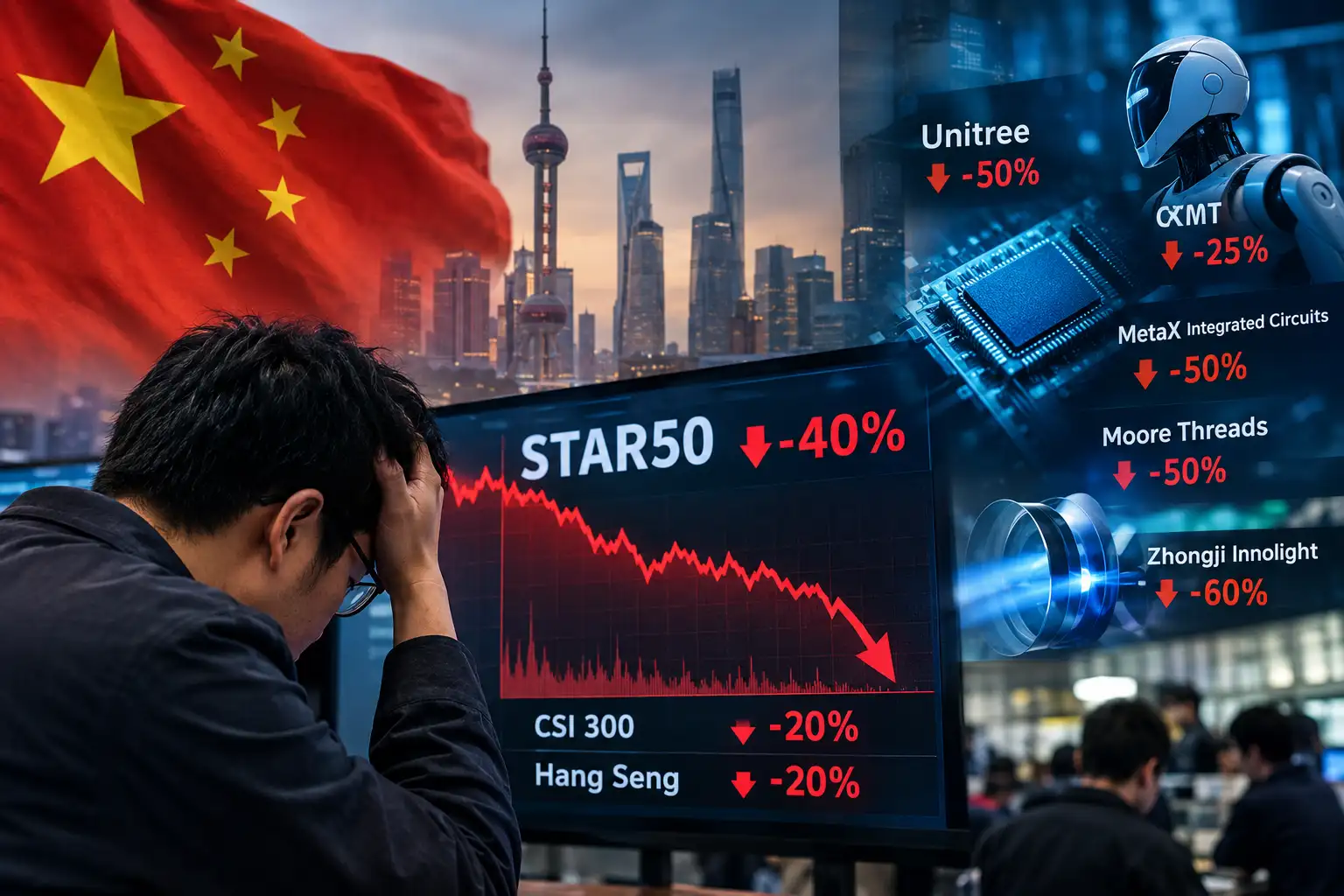
China's technology selloff has hit AI-linked companies, pushed the STAR50 index sharply lower, and left retail investors with substantial losses. Investors are moving toward safer assets as concerns grow that weaker confidence will restrict future fundraising for technology companies.
10:09 PMEconomic Times99 stories from 9 sources
Markets Rotate Away From AI as Rates and Risk Reassert Themselves
Day’s Recap
Supporting Articles

Anthropic’s IPO is gaining outsized importance as the AI trade loses momentum and interest rates rise. Its performance could influence financing conditions across Wall Street and Silicon Valley.
6:50 PMCNBCDividend-focused ETFs rallied strongly in October, adding to substantial gains in 2026 as technology stocks struggled.
6:10 PMMarketWatchTS Lombard argues that the artificial intelligence investment theme is a bubble that will eventually burst. The strategist advises investors not to try to predict the exact timing and instead prepare for a reversal.
12:05 PMMarketWatch
An S&P 500 index excluding artificial intelligence stocks is outperforming the traditional benchmark this year. The article identifies sectors and companies that could benefit if the AI trade continues to weaken.
11:39 AMCNBCBob Michele, J.P. Morgan Asset Management's head of fixed income, says investors should move into bonds while yields remain attractive and estimates returns of up to 8% over the next year, particularly in US Treasuries. He sees a recession as unlikely but warns that persistent inflation could force the Federal Reserve into larger rate hikes.
11:28 PMEconomic Times
JPMorgan Asset Management’s Bob Michele expects US bonds to return about 7% to 8% over the next year. The outlook reflects a more constructive view of the Treasury market after a period of weak performance.
11:25 PMBloomberg MarketsThe yen weakened against the dollar as investors shifted toward riskier assets and the US technology sector recovered. Markets are bracing for policy decisions from the Bank of Japan and other major central banks, while stronger Japanese service-sector inflation raises the prospect of future rate hikes.
10:15 PMEconomic Times
All respondents in a CNBC survey expected the Bank of Japan to hold rates this week while signaling a possible hike in December or January as inflation and wages rise.
8:17 PMCNBC
The Federal Reserve is expected to leave its overnight interest rate unchanged after its October meeting. Consumers therefore face no immediate change in the cost of borrowing or the returns available on cash savings.
2:51 PMCNBCOil prices fell as diplomatic efforts raised hopes of easing tensions, with Brent crude and West Texas Intermediate both moving lower. Continued attacks by Iran-aligned groups still threaten regional stability and raise the risk of supply disruptions.
10:13 PMEconomic Times
Oil prices retreated after the international benchmark surged to about $117 a barrel late last week. Traders continue to price the risk that the Middle East conflict will disrupt supply and transport.
3:28 AMFinancial Times
China’s industrial profits rose 14.4%, the strongest growth in three months, as the global AI boom and higher commodity prices linked to the war in Iran lifted earnings at miners, chipmakers and raw-material suppliers.
11:34 PMCNBC
China’s economy grew 4.5% year over year in the third quarter, narrowly beating the 4.4% consensus forecast. The data challenge claims that China is sliding into an immediate economic crisis, even as longer-term weaknesses remain.
7:44 AMFortune
Brazilian markets fell as investors priced in greater fiscal strain under Luiz Inácio Lula da Silva. Many had positioned for a victory by Jair Bolsonaro, viewed as more willing to address the budget deficit.
5:08 PMFinancial Times
Samsung Life raised $1.5 billion in a record bond sale, attracting strong demand despite broader volatility in credit markets. Other issuers have delayed planned offerings as financing conditions become less predictable.
11:26 PMBloomberg Markets
MSCI’s threat to remove Indonesian equities from emerging-market indexes is now affecting the country’s corporate bond market. An Indonesian company has shelved a planned bond sale as investors reassess market access and country risk.
11:15 PMBloomberg Markets
Iron ore fell to its lowest level in more than two years as expectations for demand weakened and supply is set to rise through year-end.
10:46 PMBloomberg Markets
Unlock completed a $433.1 million securitization backed by 4,474 home equity agreements that it originated and manages. The transaction brings home equity agreements into the structured-finance market as a distinct asset class.
10:35 AMHousing Wire
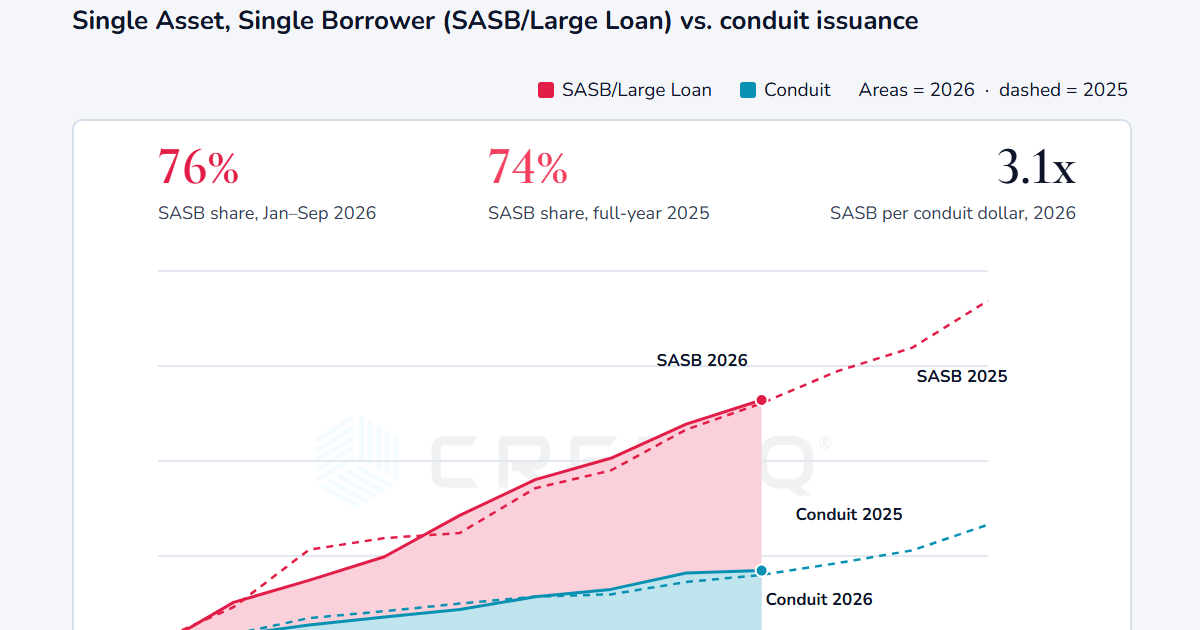
Single-asset, single-borrower deals made up 76 percent of private-label CMBS issuance through September 2026. Issuance has shifted toward apartment and hotel properties, with seven banks accounting for most of the volume, including a $3.05 billion deal backed by the Cosmopolitan of Las Vegas.
8:55 AMHousing WireIn China, the AI bubble has already burst
Summary
China's technology selloff has hit AI-linked companies, pushed the STAR50 index sharply lower, and left retail investors with substantial losses. Investors are moving toward safer assets as concerns grow that weaker confidence will restrict future fundraising for technology companies.
The market has shifted from state-backed optimism to a test of commercial returns and capital
Unlock the full First Pass Analysis to get a better understanding of why this story mattersWhy it matters
A prolonged Chinese tech downturn could slow AI investment even as competition with the United States intensifies.

From Wall Street to Silicon Valley, Anthropic IPO poised to have massive 'trickle-down effect'
Summary
Anthropic’s IPO is gaining outsized importance as the AI trade loses momentum and interest rates rise. Its performance could influence financing conditions across Wall Street and Silicon Valley.
A strong debut would reopen the market for AI listings, private fundraising, and employee liquidity,
Unlock the full First Pass Analysis to get a better understanding of why this story mattersWhy it matters
The IPO may become the clearest market test yet of whether investors still accept AI’s high spending and delayed-profit model.
Dividend stocks are having an excellent October as tech sector struggles
Summary
Dividend-focused ETFs rallied strongly in October, adding to substantial gains in 2026 as technology stocks struggled.
Investors are shifting toward cash-generating companies as technology loses momentum, signaling a broader preference for
Unlock the full First Pass Analysis to get a better understanding of why this story mattersWhy it matters
The leadership change suggests investors are demanding income and stability rather than relying solely on tech-driven gains.
This strategist says it’s a matter of when, not if, the AI bubble pops. Here’s how to prepare for that.
Summary
TS Lombard argues that the artificial intelligence investment theme is a bubble that will eventually burst. The strategist advises investors not to try to predict the exact timing and instead prepare for a reversal.
The central risk is concentration, not merely the difficulty of calling the peak. Investors who
Unlock the full First Pass Analysis to get a better understanding of why this story mattersWhy it matters
Preparing for a possible bust means managing portfolio concentration before market stress makes diversification more expensive.

Investors are doing just as well this year by shunning AI. How to invest if the tech trade keeps fizzling
Summary
An S&P 500 index excluding artificial intelligence stocks is outperforming the traditional benchmark this year. The article identifies sectors and companies that could benefit if the AI trade continues to weaken.
AI leadership has not been necessary for broad-market gains, which weakens the case for concentrating
Unlock the full First Pass Analysis to get a better understanding of why this story mattersWhy it matters
A broader market leadership shift would challenge passive investors whose returns remain heavily tied to a handful of AI-linked companies.
Bond market is a buy right now, JP Morgan Asset Management's fixed income head says
Summary
Bob Michele, J.P. Morgan Asset Management's head of fixed income, says investors should move into bonds while yields remain attractive and estimates returns of up to 8% over the next year, particularly in US Treasuries. He sees a recession as unlikely but warns that persistent inflation could force the Federal Reserve into larger rate hikes.
The bullish bond case depends on locking in current yields before inflation or weaker growth
Unlock the full First Pass Analysis to get a better understanding of why this story mattersWhy it matters
Bond investors face a tradeoff between attractive income today and renewed rate risk if inflation proves persistent.

JPMorgan’s Michele Sees US Bonds Returning 7%-8% Over 12 Months
Summary
JPMorgan Asset Management’s Bob Michele expects US bonds to return about 7% to 8% over the next year. The outlook reflects a more constructive view of the Treasury market after a period of weak performance.
The forecast depends on bond yields providing enough income and potentially falling as growth or
Unlock the full First Pass Analysis to get a better understanding of why this story mattersWhy it matters
A large bond return could draw investors back toward fixed income and reduce pressure to seek gains in expensive equities.
Yen slips ahead of central bank bonanza, dollar firms on tech rebound
Summary
The yen weakened against the dollar as investors shifted toward riskier assets and the US technology sector recovered. Markets are bracing for policy decisions from the Bank of Japan and other major central banks, while stronger Japanese service-sector inflation raises the prospect of future rate hikes.
The immediate shift is toward dollar strength, but Japan's inflation data keeps the prospect of
Unlock the full First Pass Analysis to get a better understanding of why this story mattersWhy it matters
Currency markets face competing forces from renewed risk appetite and the possibility of tighter Japanese policy.

Bank of Japan is expected to hold rates this week — but stay hawkish: CNBC survey
Summary
All respondents in a CNBC survey expected the Bank of Japan to hold rates this week while signaling a possible hike in December or January as inflation and wages rise.
The BOJ appears set to delay action without abandoning its tightening path. A hawkish hold
Unlock the full First Pass Analysis to get a better understanding of why this story mattersWhy it matters
Japan's next rate move is becoming a question of timing rather than direction.

Federal Reserve is likely to hold interest rates steady in October. Here's what that means for consumers
Summary
The Federal Reserve is expected to leave its overnight interest rate unchanged after its October meeting. Consumers therefore face no immediate change in the cost of borrowing or the returns available on cash savings.
A hold keeps financial conditions restrictive rather than delivering relief to borrowers. Mortgage, credit-card and
Unlock the full First Pass Analysis to get a better understanding of why this story mattersWhy it matters
The decision extends pressure on household budgets and interest-sensitive sectors while preserving income for cash holders.
Oil Price Today (October 27): Crude oil below $115 amid peace talk hopes but attacks continue. What are experts saying?
Summary
Oil prices fell as diplomatic efforts raised hopes of easing tensions, with Brent crude and West Texas Intermediate both moving lower. Continued attacks by Iran-aligned groups still threaten regional stability and raise the risk of supply disruptions.
Diplomatic progress has capped prices, but it has not removed the supply risk. Further attacks
Unlock the full First Pass Analysis to get a better understanding of why this story mattersWhy it matters
Oil markets remain vulnerable to a sharp rebound because the security risks have outlasted the initial optimism over negotiations.

Oil price falls back as traders remain focused on Middle East conflict
Summary
Oil prices retreated after the international benchmark surged to about $117 a barrel late last week. Traders continue to price the risk that the Middle East conflict will disrupt supply and transport.
The pullback reflects short-term profit-taking, not a resolution of the underlying risk. Prices will remain
Unlock the full First Pass Analysis to get a better understanding of why this story mattersWhy it matters
Lower prices today do not remove the risk of another sharp oil spike if the conflict worsens.

China industrial profits post strongest growth in three months as tech boom widens economic divide
Summary
China’s industrial profits rose 14.4%, the strongest growth in three months, as the global AI boom and higher commodity prices linked to the war in Iran lifted earnings at miners, chipmakers and raw-material suppliers.
The gain is concentrated in sectors benefiting from external demand and commodity prices rather than
Unlock the full First Pass Analysis to get a better understanding of why this story mattersWhy it matters
China’s profit rebound reflects global technology and commodity cycles more than a durable improvement in its broader economy.

Trump said China was headed for ‘big trouble.’ Yet its economy is growing faster than the U.S., and its deficits are moving in the right direction
Summary
China’s economy grew 4.5% year over year in the third quarter, narrowly beating the 4.4% consensus forecast. The data challenge claims that China is sliding into an immediate economic crisis, even as longer-term weaknesses remain.
The key shift is that China’s near-term growth is holding up better than expected and
Unlock the full First Pass Analysis to get a better understanding of why this story mattersWhy it matters
Stronger-than-expected Chinese growth can reset assumptions about global demand, market leadership, and the depth of Beijing’s economic problems.

Brazil’s currency plunges most since 1999 after Lula’s election victory
Summary
Brazilian markets fell as investors priced in greater fiscal strain under Luiz Inácio Lula da Silva. Many had positioned for a victory by Jair Bolsonaro, viewed as more willing to address the budget deficit.
The selloff reflects a loss of confidence in Brazil's fiscal trajectory, not just a change
Unlock the full First Pass Analysis to get a better understanding of why this story mattersWhy it matters
Brazil's market reaction will pressure the new government to establish fiscal credibility before borrowing costs rise further.
2 stories · 2 sources

Samsung Life’s Record Bond Shows High-Grade Grit in Turmoil
Summary
Samsung Life raised $1.5 billion in a record bond sale, attracting strong demand despite broader volatility in credit markets. Other issuers have delayed planned offerings as financing conditions become less predictable.
Investor demand is separating highly rated borrowers from weaker credits. Samsung’s ability to raise a
Unlock the full First Pass Analysis to get a better understanding of why this story mattersWhy it matters
Credit stress is tightening access unevenly, with strong balance sheets gaining an advantage over marginal borrowers.

MSCI Fallout Widens With Indonesian Corporate Bond Sale Shelved
Summary
MSCI’s threat to remove Indonesian equities from emerging-market indexes is now affecting the country’s corporate bond market. An Indonesian company has shelved a planned bond sale as investors reassess market access and country risk.
The risk is spreading from equity classifications into corporate financing costs. A change in index
Unlock the full First Pass Analysis to get a better understanding of why this story mattersWhy it matters
Index-provider decisions can transmit quickly into real-economy funding conditions, not just portfolio allocations.

Iron Ore Declines to Two-Year Low as Demand Outlook Weakens
Summary
Iron ore fell to its lowest level in more than two years as expectations for demand weakened and supply is set to rise through year-end.
The market is absorbing a widening mismatch between available supply and expected consumption. Lower prices
Unlock the full First Pass Analysis to get a better understanding of why this story mattersWhy it matters
Iron ore weakness signals deteriorating confidence in the industrial and construction cycle.

Unlock closes $433.1M home equity agreement securitization
Summary
Unlock completed a $433.1 million securitization backed by 4,474 home equity agreements that it originated and manages. The transaction brings home equity agreements into the structured-finance market as a distinct asset class.
The deal gives Unlock capital-markets funding for a portfolio of agreements tied to future home-price
Unlock the full First Pass Analysis to get a better understanding of why this story mattersWhy it matters
Securitization could accelerate the growth of home equity agreements while making investor demand and housing-market performance more important to their availability.

SASBs Dominate Conduits 3 to 1 in 2026 CMBS Market
Summary
Single-asset, single-borrower deals made up 76 percent of private-label CMBS issuance through September 2026. Issuance has shifted toward apartment and hotel properties, with seven banks accounting for most of the volume, including a $3.05 billion deal backed by the Cosmopolitan of Las Vegas.
SASB concentration has made the CMBS market more dependent on a small group of banks
Unlock the full First Pass Analysis to get a better understanding of why this story mattersWhy it matters
A concentrated CMBS market can support issuance while making disruptions at a few large properties or banks more consequential.
Other Developments
A curated list of other prominent stories from this day.

Japan’s life insurers are shifting out of lower-yielding bonds and into higher-yielding debt as elevated rates create opportunities to improve portfolio returns.
10:43 PMBloomberg MarketsGold prices declined as a stronger dollar reduced demand for the metal ahead of the Federal Reserve's policy meeting. Investors expect rates to remain unchanged for now but are watching for signals of a possible December hike, alongside geopolitical risks and new economic data.
10:09 PMEconomic Times
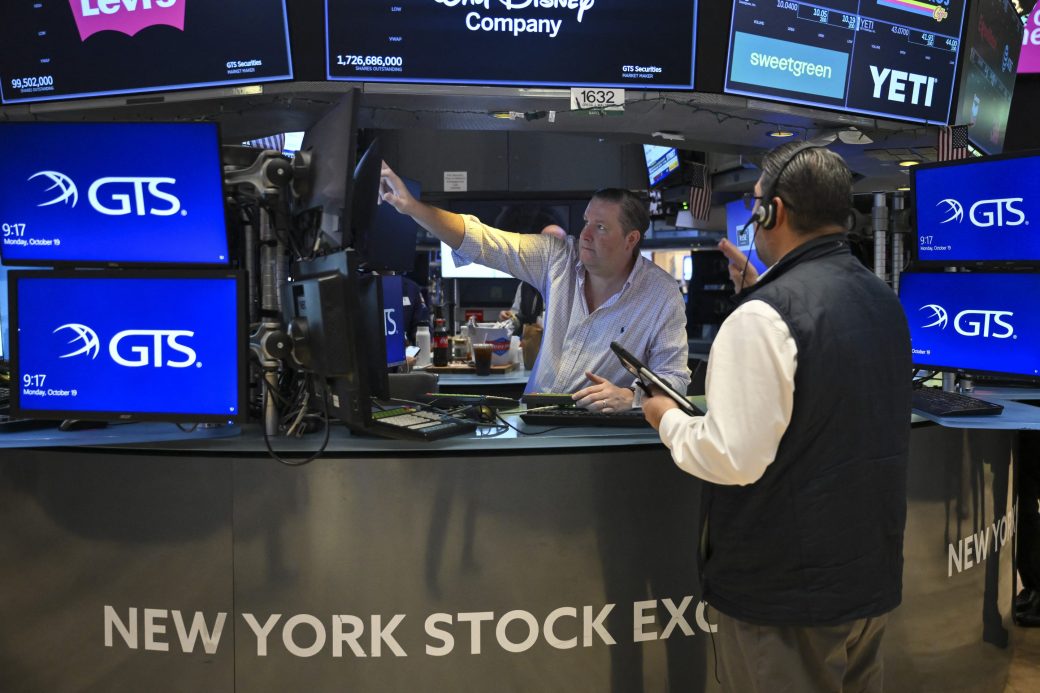
Jim Cramer warned that a surge of large initial public offerings could threaten the stock market's bull-market rally.
6:09 PMCNBCOptions-market positioning is helping explain why the S&P 500 has barely moved since June, according to UBS strategists.
6:03 PMMarketWatchHistorical market data does not support the idea of an early Santa Claus rally in the fall. The stronger seasonal gains typically arrive during the traditional year-end period.
4:09 PMMarketWatch
The article compares the fiscal problems facing France and Britain and concludes that one country is in materially weaker shape. Both face budget pressure, but their relative positions differ sharply.
12:51 PMFinextraRetail trading activity has declined as individual investors become more cautious about stocks. The pullback stands out after a sharp period of losses for hedge funds and reduced participation across the market.
9:37 AMMarketWatch
Markets are finding some support from ongoing talks between Saudi Arabia and Iran, while Moody’s kept France’s credit rating unchanged despite the recent unrest.
7:25 AMFortune
Guernsey, Jersey and other offshore financial centers expect higher tax revenues after raising rates to comply with the OECD's global minimum tax rules for large multinationals.
1:00 AMFinancial Times
Japan Life Insurers Swap Into Higher-Yield Bonds to Lift Returns
Summary
Japan’s life insurers are shifting out of lower-yielding bonds and into higher-yielding debt as elevated rates create opportunities to improve portfolio returns.
Higher domestic and global yields are changing the incentives for Japan’s large institutional investors. Continued
Unlock the full First Pass Analysis to get a better understanding of why this story mattersWhy it matters
Japan’s insurers are becoming an active force in global bond-market allocation rather than passive yield seekers.
Gold eases as stronger dollar weighs, Fed meeting in focus
Summary
Gold prices declined as a stronger dollar reduced demand for the metal ahead of the Federal Reserve's policy meeting. Investors expect rates to remain unchanged for now but are watching for signals of a possible December hike, alongside geopolitical risks and new economic data.
The stronger dollar and the prospect of higher US rates are the immediate obstacles for
Unlock the full First Pass Analysis to get a better understanding of why this story mattersWhy it matters
Gold's next move depends on whether monetary-policy pressure outweighs its protection against geopolitical risk.

Jim Cramer warns this overlooked danger could threaten the market rally
Summary
Jim Cramer warned that a surge of large initial public offerings could threaten the stock market's bull-market rally.
The risk is that a flood of new issuance absorbs investor cash and exposes weak
Unlock the full First Pass Analysis to get a better understanding of why this story mattersWhy it matters
Heavy IPO supply can test whether the rally reflects durable demand or limited available stock.
Options traders are seizing control of the S&P 500
Summary
Options-market positioning is helping explain why the S&P 500 has barely moved since June, according to UBS strategists.
Options flows, rather than broad fundamental conviction, are increasingly shaping the index's day-to-day behavior. That
Unlock the full First Pass Analysis to get a better understanding of why this story mattersWhy it matters
A quiet S&P 500 may reflect derivatives-driven stability, not a durable consensus about the economy or earnings.
Sorry investors, but there’s no such thing as an early ‘Santa Claus rally.’ Here’s when the real gains typically happen.
Summary
Historical market data does not support the idea of an early Santa Claus rally in the fall. The stronger seasonal gains typically arrive during the traditional year-end period.
The decisive point is that investors may be treating ordinary autumn strength as a seasonal
Unlock the full First Pass Analysis to get a better understanding of why this story mattersWhy it matters
Seasonal narratives can distort timing and risk-taking when investors confuse a broad market rebound with the statistically stronger year-end window.

France and Britain Are Both in Fiscal Trouble. But One Is in Far Worse Shape
Summary
The article compares the fiscal problems facing France and Britain and concludes that one country is in materially weaker shape. Both face budget pressure, but their relative positions differ sharply.
The comparison matters because fiscal stress is not evenly distributed across advanced economies. The weaker
Unlock the full First Pass Analysis to get a better understanding of why this story mattersWhy it matters
Relative fiscal credibility can determine which sovereign bond market absorbs the next shock.
Retail investors are getting cold feet about stocks, just when the market needs them most
Summary
Retail trading activity has declined as individual investors become more cautious about stocks. The pullback stands out after a sharp period of losses for hedge funds and reduced participation across the market.
Retail investors are withdrawing liquidity at a time when institutional losses may already be reducing
Unlock the full First Pass Analysis to get a better understanding of why this story mattersWhy it matters
A weaker retail bid removes an important stabilizing force from an already fragile market.

Traders are looking on the bright side despite last week’s carnage in tech stocks
Summary
Markets are finding some support from ongoing talks between Saudi Arabia and Iran, while Moody’s kept France’s credit rating unchanged despite the recent unrest.
The immediate shift is a modest reduction in geopolitical and sovereign-risk pressure, not a reversal
Unlock the full First Pass Analysis to get a better understanding of why this story mattersWhy it matters
Geopolitical relief may steady markets, but it does not resolve the concentration and valuation risks exposed by the tech decline.

Guernsey, Jersey and other havens rake in revenues from global minimum tax
Summary
Guernsey, Jersey and other offshore financial centers expect higher tax revenues after raising rates to comply with the OECD's global minimum tax rules for large multinationals.
The minimum tax is creating an unexpected revenue stream for jurisdictions that previously competed through
Unlock the full First Pass Analysis to get a better understanding of why this story mattersWhy it matters
The policy may reduce the payoff from tax competition without eliminating the fiscal role of offshore centers.
Make it yours
Build Your First Pass.
Pick your topics, set your cadence, and receive your personalized First Pass in your inbox. It’s that simple!