
Saudi Arabia shut its East-West oil pipeline after a drone attack damaged critical infrastructure. Riyadh said the attack originated in Iraq, while satellite imagery showed the reported damage.
10:18 PMAl Jazeera41 stories from 9 sources
Supporting Articles
Saudi Arabia shut its East-West oil pipeline after a drone attack damaged critical infrastructure. Riyadh said the attack originated in Iraq, while satellite imagery showed the reported damage.
10:18 PMAl Jazeera
Houthi forces seized control of Yemen's Red Sea coast while Saudi Arabia suspended a major oil pipeline after a drone attack. The developments connect fighting in Yemen with direct risks to regional energy infrastructure and shipping.
8:00 PMAl Jazeera
The Houthis have seized Red Sea islands from Saudi-backed forces in a rapid offensive. The advance strengthens their control over a vital shipping corridor and has unsettled energy markets.
4:56 PMFinancial Times
The conflict has expanded as Houthi forces pressure Saudi energy infrastructure and gain effective control over access near the strategic Bab al-Mandeb Strait. The pipeline shutdown deepens the Red Sea crisis and contributes to rising oil prices.
3:58 PMMarketWatch
The IEA warned that oil demand could enter a sharp contraction as refined fuel prices soar and the Strait of Hormuz remains closed for the year. The agency described the prospective downturn as a lost period for global oil consumption.
5:46 AMFinancial Times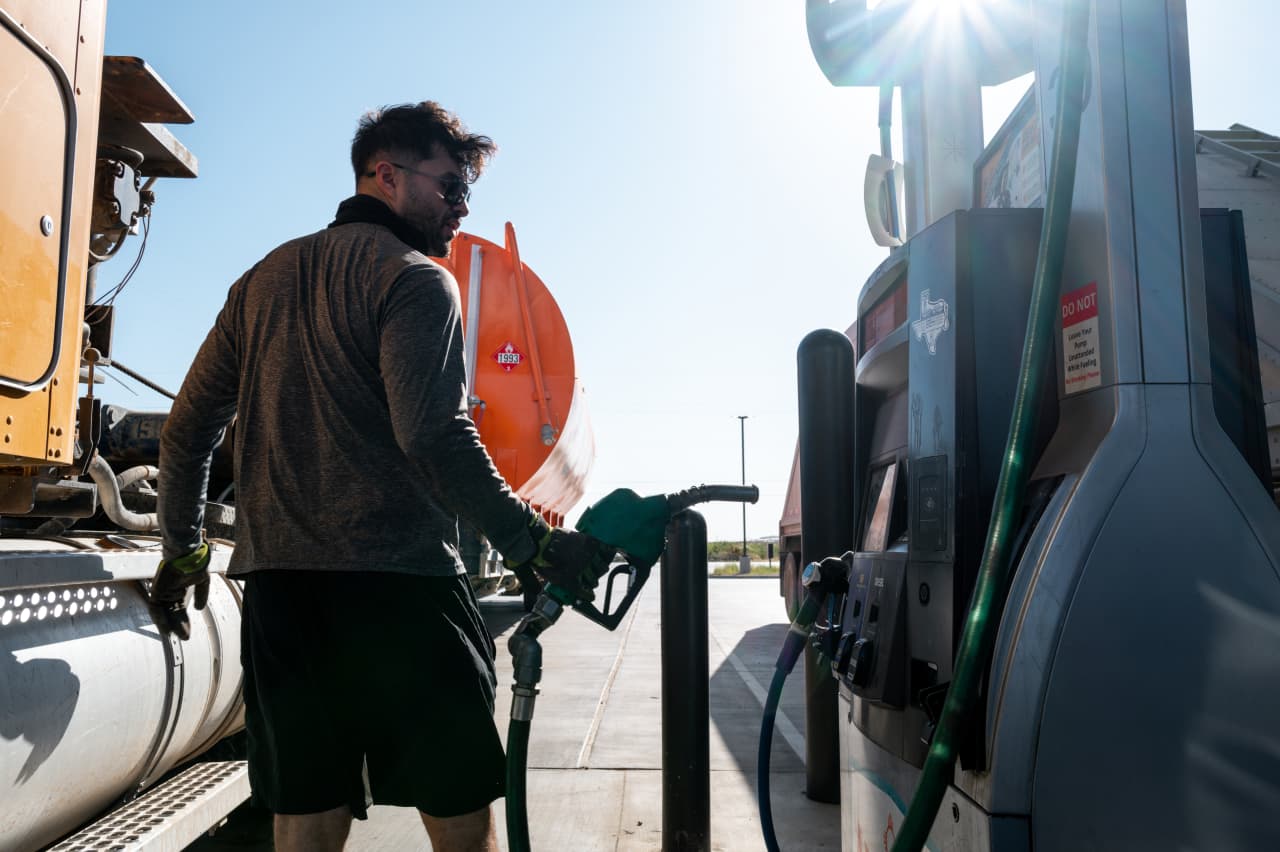
Record diesel prices and rising natural-gas costs are set to increase expenses across commuting, freight, food distribution and other parts of the economy. Diesel affects a wide range of goods and services because it powers much of the transport and logistics system.
10:22 AMMarketWatch
US diesel prices have risen above $6 per gallon as tensions between Washington and Iran disrupt global fuel supplies and push crude above $100 per barrel. Higher diesel costs are increasing transportation expenses and putting upward pressure on prices for everyday goods.
9:03 AMEconomic Times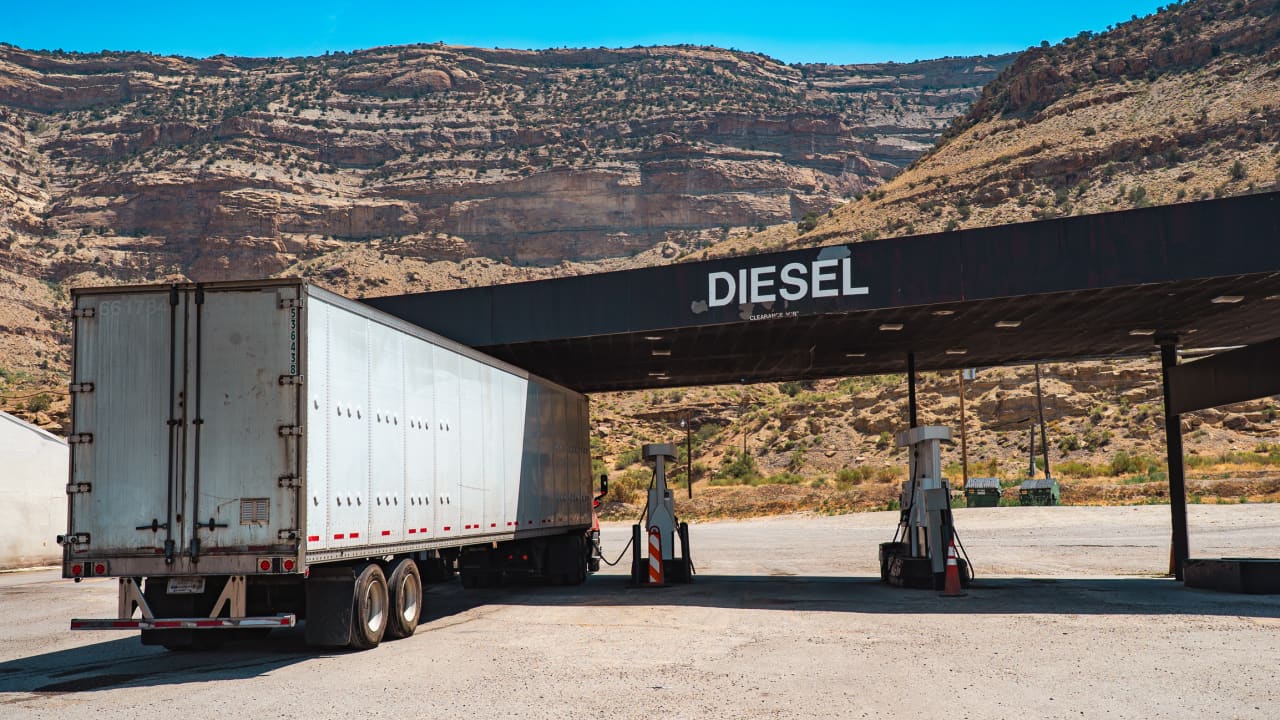
A Bank of America strategist identified diesel prices as a more immediate threat to the economy than rising bond yields. The strategist also pointed to an exchange-traded fund that has outperformed the broader market.
6:40 AMMarketWatch
Oil prices fell sharply after Brent and WTI posted double-digit weekly gains above $100 a barrel. The decline ended multiday advances in both benchmarks.
3:25 PMCNBC
Oil prices fell as markets responded to signs of diplomatic engagement over the Strait of Hormuz. At the same time, Saudi Arabia remains exposed to Houthi attacks, which threaten another critical route for crude exports.
3:07 PMFortune
Iran says it will meet Gulf states in Oman on Monday to discuss the Strait of Hormuz and promote greater regional understanding. The talks come as tensions over the strategically vital waterway remain high.
2:33 PMAl Jazeera
US crude prices slipped below $100 a barrel while diesel prices rose above $6 a gallon to a new record. Reports of possible diplomatic talks between Gulf states helped pull Brent and WTI lower.
6:12 AMMarketWatchVenezuela could eventually affect global oil markets, but restoring production will require years, substantial investment and renewed investor confidence. Europe’s rapid solar buildout is straining power markets, while surplus wind in Scotland and rising security risks are creating openings for data centers and defense technology.
7:13 PMBloomberg MarketsA small group of news organizations traveled to Caracas with the U.S. secretary of energy as Venezuela pursued new oil agreements. The visit offered a close view of the negotiations and the political conditions surrounding them.
12:59 PMCNBCPennsylvania Governor Josh Shapiro has imposed new restrictions on data center development, prompting an industry trade group to warn that the policy could weaken a major source of future demand for the state's shale gas producers.
1:30 PMBloomberg MarketsThe Pennsylvania Public Utility Commission plans to examine ratemaking, utility returns on equity and curtailment rules as data center demand expands. The review comes as officials assess whether PJM has enough resources to serve rapidly rising electricity consumption.
10:57 AMUtility DiveThe U.S. Court of Appeals for the District of Columbia Circuit rejected a Department of Energy order that delayed a coal plant's retirement, ruling that the agency had exceeded its statutory authority. The court warned that an expansive interpretation of emergency powers could invite repeated federal intervention in energy markets.
12:41 PMUtility DiveSummary
Saudi Arabia shut its East-West oil pipeline after a drone attack damaged critical infrastructure. Riyadh said the attack originated in Iraq, while satellite imagery showed the reported damage.
The incident exposes the vulnerability of Saudi oil infrastructure to relatively low-cost drone attacks and
Unlock the full First Pass Analysis to get a better understanding of why this story mattersWhy it matters
Damage to a major pipeline can quickly affect oil flows, regional security calculations, and global energy prices.
5 stories · 4 sources
Summary
Houthi forces seized control of Yemen's Red Sea coast while Saudi Arabia suspended a major oil pipeline after a drone attack. The developments connect fighting in Yemen with direct risks to regional energy infrastructure and shipping.
Houthi control of the coast strengthens their ability to threaten maritime traffic and project power
Unlock the full First Pass Analysis to get a better understanding of why this story mattersWhy it matters
Control of the Red Sea coastline and damage to Saudi infrastructure could endanger both global shipping and oil supplies.
Summary
The Houthis have seized Red Sea islands from Saudi-backed forces in a rapid offensive. The advance strengthens their control over a vital shipping corridor and has unsettled energy markets.
The territorial gain gives the Houthis more leverage over maritime traffic and raises the risk
Unlock the full First Pass Analysis to get a better understanding of why this story mattersWhy it matters
Houthi control near a major shipping route increases the risk of wider trade and energy disruption.
3 stories · 3 sources
Summary
The conflict has expanded as Houthi forces pressure Saudi energy infrastructure and gain effective control over access near the strategic Bab al-Mandeb Strait. The pipeline shutdown deepens the Red Sea crisis and contributes to rising oil prices.
The Houthis are broadening the conflict from attacks on individual targets to pressure over two
Unlock the full First Pass Analysis to get a better understanding of why this story mattersWhy it matters
The crisis now threatens both oil production logistics and the maritime routes that connect the Gulf to global buyers.
Summary
The IEA warned that oil demand could enter a sharp contraction as refined fuel prices soar and the Strait of Hormuz remains closed for the year. The agency described the prospective downturn as a lost period for global oil consumption.
A prolonged Hormuz closure would first create an acute supply and price shock, then destroy
Unlock the full First Pass Analysis to get a better understanding of why this story mattersWhy it matters
The crisis could move from an oil shortage to a broader global slowdown if high fuel prices persist.
Summary
Record diesel prices and rising natural-gas costs are set to increase expenses across commuting, freight, food distribution and other parts of the economy. Diesel affects a wide range of goods and services because it powers much of the transport and logistics system.
The price shock will spread beyond the pump as trucking, agriculture, delivery and construction firms
Unlock the full First Pass Analysis to get a better understanding of why this story mattersWhy it matters
Higher energy costs can broaden inflation even when the initial shock is concentrated in fuel markets.
Summary
US diesel prices have risen above $6 per gallon as tensions between Washington and Iran disrupt global fuel supplies and push crude above $100 per barrel. Higher diesel costs are increasing transportation expenses and putting upward pressure on prices for everyday goods.
Diesel above $6 directly raises costs for trucking, shipping, agriculture, and construction, sectors that have
Unlock the full First Pass Analysis to get a better understanding of why this story mattersWhy it matters
A diesel shock can spread quickly through supply chains and intensify broader inflation.
2 stories · 2 sources
Summary
A Bank of America strategist identified diesel prices as a more immediate threat to the economy than rising bond yields. The strategist also pointed to an exchange-traded fund that has outperformed the broader market.
Diesel is a direct input for freight, agriculture, construction, and industrial production, so sustained price
Unlock the full First Pass Analysis to get a better understanding of why this story mattersWhy it matters
Diesel offers a faster measure of real-economy stress than financial-market indicators alone.
Summary
Oil prices fell sharply after Brent and WTI posted double-digit weekly gains above $100 a barrel. The decline ended multiday advances in both benchmarks.
The reversal signals profit-taking and reduced immediate risk pricing, not necessarily a resolution of the
Unlock the full First Pass Analysis to get a better understanding of why this story mattersWhy it matters
A one-day retreat does little to remove the inflationary risk created by oil trading above $100.
Summary
Oil prices fell as markets responded to signs of diplomatic engagement over the Strait of Hormuz. At the same time, Saudi Arabia remains exposed to Houthi attacks, which threaten another critical route for crude exports.
The market is treating possible Gulf diplomacy as more immediate than the unresolved threat to
Unlock the full First Pass Analysis to get a better understanding of why this story mattersWhy it matters
The price drop reflects expectations about diplomacy, not the removal of the physical threats to oil transport.
Summary
Iran says it will meet Gulf states in Oman on Monday to discuss the Strait of Hormuz and promote greater regional understanding. The talks come as tensions over the strategically vital waterway remain high.
The meeting creates a diplomatic channel around a chokepoint central to global energy trade. Its
Unlock the full First Pass Analysis to get a better understanding of why this story mattersWhy it matters
Even limited agreement around Hormuz could reduce the risk of a regional escalation with immediate consequences for energy markets and shipping.
Summary
US crude prices slipped below $100 a barrel while diesel prices rose above $6 a gallon to a new record. Reports of possible diplomatic talks between Gulf states helped pull Brent and WTI lower.
The divergence shows that easing crude prices are not immediately relieving the refined-fuel bottleneck. Diesel
Unlock the full First Pass Analysis to get a better understanding of why this story mattersWhy it matters
The economy can remain under fuel-price pressure even when headline crude benchmarks retreat.
Summary
Venezuela could eventually affect global oil markets, but restoring production will require years, substantial investment and renewed investor confidence. Europe’s rapid solar buildout is straining power markets, while surplus wind in Scotland and rising security risks are creating openings for data centers and defense technology.
The main constraint is execution: Venezuela lacks the capital and trust to quickly convert reserves
Unlock the full First Pass Analysis to get a better understanding of why this story mattersWhy it matters
Energy abundance will not automatically translate into usable supply, and infrastructure bottlenecks are becoming the central investment opportunity.
Summary
A small group of news organizations traveled to Caracas with the U.S. secretary of energy as Venezuela pursued new oil agreements. The visit offered a close view of the negotiations and the political conditions surrounding them.
The trip signals that Venezuela's oil sector is again receiving high-level U.S. attention as Washington
Unlock the full First Pass Analysis to get a better understanding of why this story mattersWhy it matters
Venezuela's reentry into oil diplomacy could alter regional supply expectations and test the limits of U.S. engagement with Caracas.
Summary
Pennsylvania Governor Josh Shapiro has imposed new restrictions on data center development, prompting an industry trade group to warn that the policy could weaken a major source of future demand for the state's shale gas producers.
The restrictions put a potential brake on the electricity load growth that gas companies expected
Unlock the full First Pass Analysis to get a better understanding of why this story mattersWhy it matters
Pennsylvania's data center policy could reshape both the state's electricity expansion and the outlook for regional gas demand.
Summary
The Pennsylvania Public Utility Commission plans to examine ratemaking, utility returns on equity and curtailment rules as data center demand expands. The review comes as officials assess whether PJM has enough resources to serve rapidly rising electricity consumption.
The commission is moving toward rules that could determine who pays for new capacity and
Unlock the full First Pass Analysis to get a better understanding of why this story mattersWhy it matters
Pennsylvania's regulatory choices will shape whether data center growth strengthens the grid or shifts its costs onto existing ratepayers.
Summary
The U.S. Court of Appeals for the District of Columbia Circuit rejected a Department of Energy order that delayed a coal plant's retirement, ruling that the agency had exceeded its statutory authority. The court warned that an expansive interpretation of emergency powers could invite repeated federal intervention in energy markets.
The ruling limits DOE's ability to keep aging coal plants online through emergency directives without
Unlock the full First Pass Analysis to get a better understanding of why this story mattersWhy it matters
The decision narrows federal power to override coal retirements and raises the legal cost of using emergency authority to manage grid reliability.
A curated list of other prominent stories from this day.
Shell’s acquisition of ARC Resources is expected to improve the oil major’s free cash flow from next year. The deal gives Shell greater exposure to ARC’s upstream assets as their valuation has risen.
1:00 PMFinancial TimesThe outage of the Champlain Hudson Power Express during the summer is presented as evidence of the need for an independent grid operator in New York. An independent operator can manage reliability and system decisions without favoring particular utilities or political interests.
11:48 AMUtility DiveHungary will pay 20,000 forints, or about $64, per car to hundreds of thousands of drivers through the end of the year. The measure is intended to cushion households from sharply higher fuel prices.
9:54 AMBloomberg Markets
The article reports the current oil price on September 11, 2026 and outlines why crude-price changes influence energy bills and the cost of everyday goods.
9:30 AMFortuneUnplanned power plant outages fell sharply during severe winter storms in the 2025/26 season, according to regulators and the grid watchdog. Better preparation and greater use of interregional power transfers helped avoid planned blackouts during an early 2026 cold snap.
8:48 AMUtility DiveCommodities strategist Jeff Currie says average US gasoline prices are highly likely to reach $5 per gallon before the midterm elections. He attributes the risk to tightening fuel supplies and the erosion of currency value.
8:19 AMBloomberg MarketsSummary
Shell’s acquisition of ARC Resources is expected to improve the oil major’s free cash flow from next year. The deal gives Shell greater exposure to ARC’s upstream assets as their valuation has risen.
The key shift is that Shell expects the acquisition to translate into stronger cash generation
Unlock the full First Pass Analysis to get a better understanding of why this story mattersWhy it matters
The deal will be judged quickly on whether projected free-cash-flow gains offset the cost and risk of expanding Shell’s upstream portfolio.
Summary
The outage of the Champlain Hudson Power Express during the summer is presented as evidence of the need for an independent grid operator in New York. An independent operator can manage reliability and system decisions without favoring particular utilities or political interests.
The outage exposed how quickly a transmission failure can turn into a broader reliability challenge,
Unlock the full First Pass Analysis to get a better understanding of why this story mattersWhy it matters
A politically insulated grid operator is becoming more important as New York's system grows more complex and less tolerant of outages.
Summary
Hungary will pay 20,000 forints, or about $64, per car to hundreds of thousands of drivers through the end of the year. The measure is intended to cushion households from sharply higher fuel prices.
The payment shifts part of the fuel-price shock onto the government budget rather than reducing
Unlock the full First Pass Analysis to get a better understanding of why this story mattersWhy it matters
Hungary is using direct fiscal support to contain the political impact of fuel inflation.
Summary
The article reports the current oil price on September 11, 2026 and outlines why crude-price changes influence energy bills and the cost of everyday goods.
The day-to-day move matters because sustained oil gains can raise transport and production costs across
Unlock the full First Pass Analysis to get a better understanding of why this story mattersWhy it matters
Daily oil-price changes provide an early read on future fuel costs and consumer inflation.
Summary
Unplanned power plant outages fell sharply during severe winter storms in the 2025/26 season, according to regulators and the grid watchdog. Better preparation and greater use of interregional power transfers helped avoid planned blackouts during an early 2026 cold snap.
The decline suggests that operational reforms and stronger coordination improved winter reliability under extreme conditions.
Unlock the full First Pass Analysis to get a better understanding of why this story mattersWhy it matters
Fewer outages indicate progress in grid resilience, while the reliance on power transfers shows where vulnerabilities remain.
Summary
Commodities strategist Jeff Currie says average US gasoline prices are highly likely to reach $5 per gallon before the midterm elections. He attributes the risk to tightening fuel supplies and the erosion of currency value.
A $5 national average would turn fuel inflation into a major political liability ahead of
Unlock the full First Pass Analysis to get a better understanding of why this story mattersWhy it matters
A gasoline shock could pressure consumers and reshape the political debate over energy policy and inflation.
Make it yours
Pick your topics, set your cadence, and receive your personalized First Pass in your inbox. It’s that simple!


