
Stocks reversed early gains as Big Tech earnings revived concerns that heavy artificial intelligence spending may not produce adequate returns. Investors moved toward defensive sectors as risk appetite weakened.
11:37 AMCNBC18 stories from 6 sources
Supporting Articles
Stocks reversed early gains as Big Tech earnings revived concerns that heavy artificial intelligence spending may not produce adequate returns. Investors moved toward defensive sectors as risk appetite weakened.
11:37 AMCNBC
US stocks experienced a sharper reversal in October as concerns over weak free-cash-flow generation and higher borrowing costs disrupted the artificial-intelligence trade. Investors are reassessing the market leaders as financing conditions become less supportive.
9:01 AMMarketWatchRecent earnings from major technology companies failed to resolve doubts about the scale and payoff of artificial intelligence spending. Instead, they reinforced concerns that lofty valuations depend on investment that may not generate returns quickly enough.
9:00 AMBloomberg Markets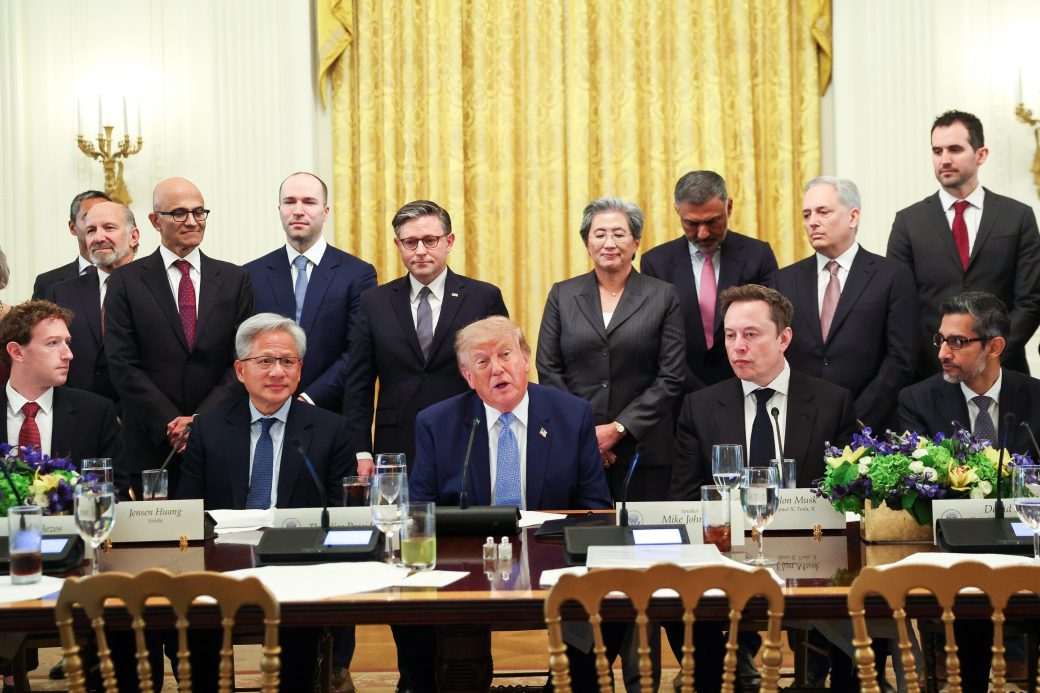
Five major technology companies could spend as much as $828 billion on AI infrastructure this year. The spending is consuming cash flow and has helped erase roughly $1 trillion in market value as investors question whether future returns will justify the investment.
6:44 AMFortune
Technology stocks weakened in late October as the pressures weighing on corporate bonds spread into equities. The outlook for portfolios is increasingly tied to borrowing costs and the policy direction that may emerge from the US midterm elections.
10:03 AMMarketWatch
Investors are reducing exposure to growth assets and returning to bonds after a prolonged sell-off. The shift reflects rising concern that US economic momentum and market gains rely too heavily on technology spending linked to artificial intelligence.
10:00 AMFinancial Times
US Treasuries rallied as a technology-stock sell-off drove investors toward safer assets, pushing the benchmark 10-year yield to its sharpest monthly decline in nearly three years. Weak reactions to Amazon and Intel earnings, alongside rising AI costs and expectations of a December rate hike, added to market uncertainty.
7:53 AMEconomic Times
Brent crude rose 13.6% in October to $117.64 a barrel, its highest level in six months, as markets priced in the risk of new US strikes on Iran and disruption around the Strait of Hormuz. Goldman Sachs warned that prices could reach $120 amid continued volatility.
12:41 AMEconomic Times
Fitch downgraded its outlook on France unexpectedly, hours after data showed the economy contracted in the third quarter.
5:36 AMFinancial Times
BNP Paribas, Societe Generale and Credit Agricole reported strong third-quarter earnings, but their shares continued to fall as investors focused on political and economic uncertainty.
1:00 AMFinancial TimesAsian stock markets with heavy exposure to artificial intelligence face a new US policy wildcard as the midterm elections approach. The result could reshape the technology trade and alter prospects for clean energy, defense and related sectors.
8:00 PMBloomberg Markets
Investors are approaching the coming weeks cautiously as uncertainty around the US midterm elections adds to already fragile market sentiment.
1:00 AMFinancial TimesSummary
Stocks reversed early gains as Big Tech earnings revived concerns that heavy artificial intelligence spending may not produce adequate returns. Investors moved toward defensive sectors as risk appetite weakened.
The market shifted from enthusiasm about technology earnings to scrutiny of the cost and payoff
Unlock the full First Pass Analysis to get a better understanding of why this story mattersWhy it matters
The AI rally now depends less on spending forecasts and more on proof that the spending can generate durable profits.
Summary
US stocks experienced a sharper reversal in October as concerns over weak free-cash-flow generation and higher borrowing costs disrupted the artificial-intelligence trade. Investors are reassessing the market leaders as financing conditions become less supportive.
The key shift is from momentum and speculative growth toward companies with stronger cash generation
Unlock the full First Pass Analysis to get a better understanding of why this story mattersWhy it matters
A sustained move away from AI-linked leaders would challenge the market’s dominant investment narrative and index performance.
Summary
Recent earnings from major technology companies failed to resolve doubts about the scale and payoff of artificial intelligence spending. Instead, they reinforced concerns that lofty valuations depend on investment that may not generate returns quickly enough.
The market is shifting from rewarding AI investment to demanding proof of cash-flow returns. That
Unlock the full First Pass Analysis to get a better understanding of why this story mattersWhy it matters
AI skepticism is becoming a valuation and market-concentration risk, not just a debate about technology.
Summary
Five major technology companies could spend as much as $828 billion on AI infrastructure this year. The spending is consuming cash flow and has helped erase roughly $1 trillion in market value as investors question whether future returns will justify the investment.
The AI trade has shifted from excitement about demand to scrutiny of capital efficiency. Heavy
Unlock the full First Pass Analysis to get a better understanding of why this story mattersWhy it matters
The market is repricing AI growth around cash generation, making infrastructure economics as important as model performance.
Summary
Technology stocks weakened in late October as the pressures weighing on corporate bonds spread into equities. The outlook for portfolios is increasingly tied to borrowing costs and the policy direction that may emerge from the US midterm elections.
Higher yields now threaten both bond prices and the valuations of long-duration technology stocks. Election-driven
Unlock the full First Pass Analysis to get a better understanding of why this story mattersWhy it matters
Investors can no longer treat stock allocation as separate from rates and political risk.
Summary
Investors are reducing exposure to growth assets and returning to bonds after a prolonged sell-off. The shift reflects rising concern that US economic momentum and market gains rely too heavily on technology spending linked to artificial intelligence.
The decisive change is a rotation away from concentrated growth risk toward fixed income. If
Unlock the full First Pass Analysis to get a better understanding of why this story mattersWhy it matters
Markets are beginning to price AI dependence as a macroeconomic vulnerability.
Summary
US Treasuries rallied as a technology-stock sell-off drove investors toward safer assets, pushing the benchmark 10-year yield to its sharpest monthly decline in nearly three years. Weak reactions to Amazon and Intel earnings, alongside rising AI costs and expectations of a December rate hike, added to market uncertainty.
The bond rally reflects a flight to safety and growing concern that heavy technology spending
Unlock the full First Pass Analysis to get a better understanding of why this story mattersWhy it matters
Lower Treasury yields can ease financial conditions even as markets price a more difficult outlook for growth and technology earnings.
Summary
Brent crude rose 13.6% in October to $117.64 a barrel, its highest level in six months, as markets priced in the risk of new US strikes on Iran and disruption around the Strait of Hormuz. Goldman Sachs warned that prices could reach $120 amid continued volatility.
The market has moved from anticipating tighter supply to pricing in a credible escalation scenario.
Unlock the full First Pass Analysis to get a better understanding of why this story mattersWhy it matters
Oil at or above $120 would transmit geopolitical risk directly into transport costs, inflation, and global growth.
Summary
Fitch downgraded its outlook on France unexpectedly, hours after data showed the economy contracted in the third quarter.
The move links France's deteriorating fiscal credibility to weaker near-term growth. Higher borrowing costs and
Unlock the full First Pass Analysis to get a better understanding of why this story mattersWhy it matters
France now faces greater market scrutiny as weak growth and fiscal risks reinforce each other.
Summary
BNP Paribas, Societe Generale and Credit Agricole reported strong third-quarter earnings, but their shares continued to fall as investors focused on political and economic uncertainty.
Earnings are not offsetting the broader risk premium attached to French assets. Investors appear more
Unlock the full First Pass Analysis to get a better understanding of why this story mattersWhy it matters
The sell-off shows that political risk can overwhelm solid bank fundamentals.
Summary
Asian stock markets with heavy exposure to artificial intelligence face a new US policy wildcard as the midterm elections approach. The result could reshape the technology trade and alter prospects for clean energy, defense and related sectors.
The elections add a political risk premium to an already crowded AI trade, because changes
Unlock the full First Pass Analysis to get a better understanding of why this story mattersWhy it matters
US election policy could reprice major parts of Asia’s equity market beyond the technology sector.
Summary
Investors are approaching the coming weeks cautiously as uncertainty around the US midterm elections adds to already fragile market sentiment.
Political risk is becoming an additional source of volatility just as markets remain sensitive to
Unlock the full First Pass Analysis to get a better understanding of why this story mattersWhy it matters
US political uncertainty could amplify market swings and delay investment decisions.
A curated list of other prominent stories from this day.

The renminbi may become a usable alternative to the dollar, but it cannot seriously challenge dollar dominance without a much larger pool of Chinese assets that foreign investors can freely buy and sell.
6:15 PMFortunePresident Recep Tayyip Erdogan appointed Muhsin Atci, who leads Turkey's tax inspection board, to head the country's market regulator after an investment fund crisis disrupted financial markets.
5:50 PMBloomberg Markets
The US economy is under clear financial pressure, but current conditions have not yet reached the level of a full cost-of-living crisis.
6:30 AMFortune
Silver has fallen more than 58% from its February record of nearly $120 an ounce to about $50, pressured by profit-taking, weaker industrial demand and changing macroeconomic conditions. The outlook now depends on whether investment demand and industrial use can rebuild momentum.
5:03 AMEconomic Times
The Brazilian real fell sharply after Luiz Inácio Lula da Silva’s surprise election victory, making Brazil’s agricultural exports more competitive in global markets. The resulting pressure weakened prices for commodities and reduced the pricing power of farmers in competing countries.
1:00 AMFinancial TimesHong Kong’s economy maintained strong growth in the third quarter, putting it on track for what could be its fastest annual expansion in five years, according to Financial Secretary Paul Chan.
12:50 AMBloomberg MarketsSummary
The renminbi may become a usable alternative to the dollar, but it cannot seriously challenge dollar dominance without a much larger pool of Chinese assets that foreign investors can freely buy and sell.
Limited market access and a shallow supply of liquid renminbi assets remain the central barriers
Unlock the full First Pass Analysis to get a better understanding of why this story mattersWhy it matters
The yuan may reduce dependence on the dollar at the margins, but structural limits keep the dollar at the center of global finance.
Summary
President Recep Tayyip Erdogan appointed Muhsin Atci, who leads Turkey's tax inspection board, to head the country's market regulator after an investment fund crisis disrupted financial markets.
The appointment puts a tax official at the center of Turkey's effort to contain the
Unlock the full First Pass Analysis to get a better understanding of why this story mattersWhy it matters
The regulator's credibility will shape whether Turkey can stabilize markets without deepening concerns about political control.
Summary
The US economy is under clear financial pressure, but current conditions have not yet reached the level of a full cost-of-living crisis.
Households may be absorbing higher costs through reduced savings, weaker discretionary spending and greater reliance
Unlock the full First Pass Analysis to get a better understanding of why this story mattersWhy it matters
The distinction between pressure and crisis may disappear quickly if household resilience deteriorates.
Summary
Silver has fallen more than 58% from its February record of nearly $120 an ounce to about $50, pressured by profit-taking, weaker industrial demand and changing macroeconomic conditions. The outlook now depends on whether investment demand and industrial use can rebuild momentum.
The collapse shows how quickly a crowded commodity rally can reverse when speculative demand fades
Unlock the full First Pass Analysis to get a better understanding of why this story mattersWhy it matters
Silver's reversal is a warning about the risks of treating momentum-driven commodity gains as durable fundamentals.
Summary
The Brazilian real fell sharply after Luiz Inácio Lula da Silva’s surprise election victory, making Brazil’s agricultural exports more competitive in global markets. The resulting pressure weakened prices for commodities and reduced the pricing power of farmers in competing countries.
The decisive shift is currency-driven: a weaker real lets Brazilian producers accept lower dollar prices
Unlock the full First Pass Analysis to get a better understanding of why this story mattersWhy it matters
A weaker Brazilian currency can reset global agricultural pricing and squeeze producers far beyond Brazil.
Summary
Hong Kong’s economy maintained strong growth in the third quarter, putting it on track for what could be its fastest annual expansion in five years, according to Financial Secretary Paul Chan.
The stronger growth outlook improves Hong Kong’s fiscal and business backdrop after a period of
Unlock the full First Pass Analysis to get a better understanding of why this story mattersWhy it matters
A five-year growth high would mark a meaningful acceleration for Hong Kong and strengthen the case for improved domestic demand.
Make it yours
Pick your topics, set your cadence, and receive your personalized First Pass in your inbox. It’s that simple!