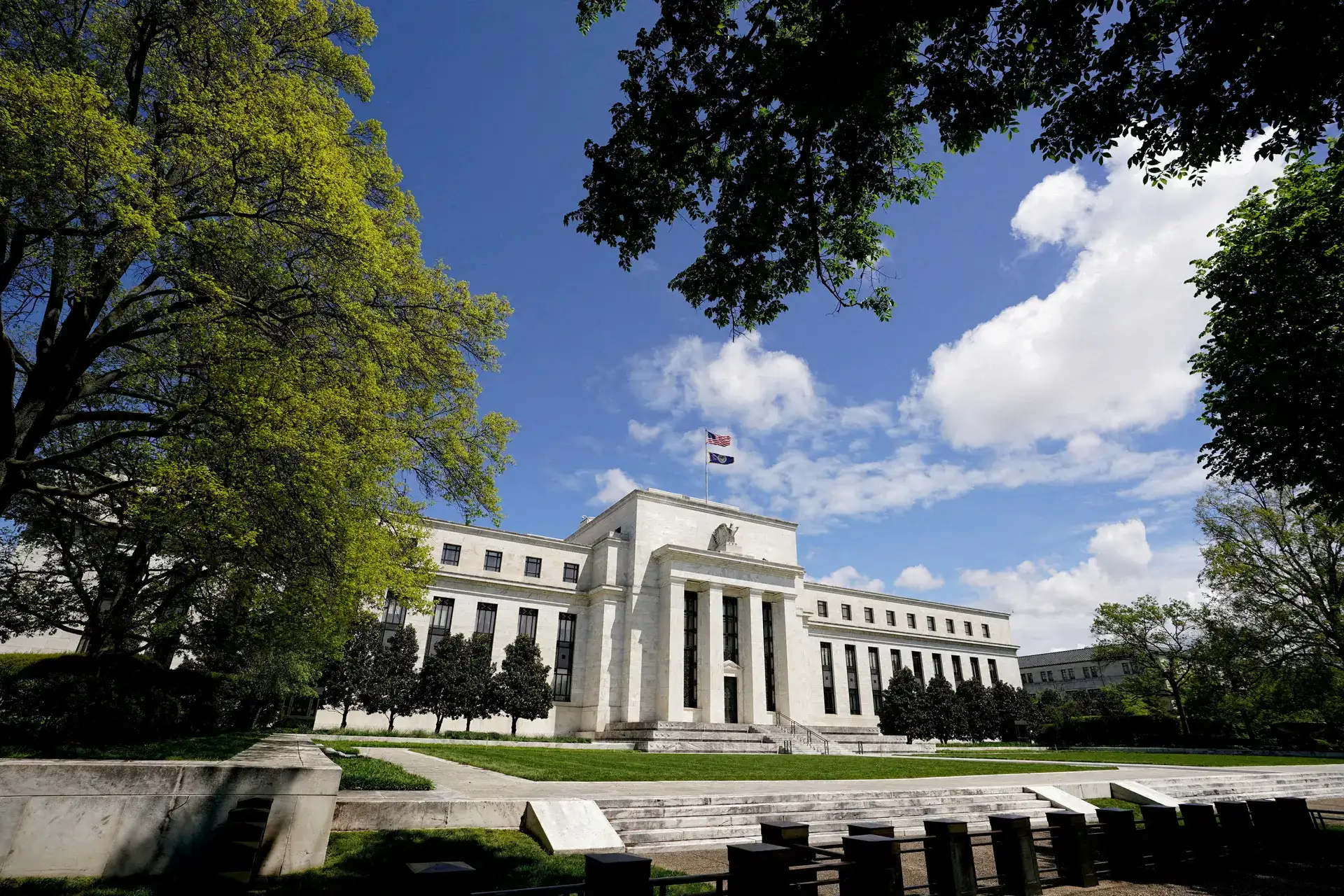
The US 10-year Treasury yield moved close to 5% as higher oil prices intensified inflation concerns and increased expectations of a Federal Reserve rate hike. The rise adds pressure to bond markets globally.
11:40 PMEconomic Times123 stories from 9 sources
Supporting Articles
The US 10-year Treasury yield moved close to 5% as higher oil prices intensified inflation concerns and increased expectations of a Federal Reserve rate hike. The rise adds pressure to bond markets globally.
11:40 PMEconomic Times
A renewed rise in oil prices above $105 a barrel has revived the global bond sell-off. US 30-year borrowing costs have climbed as weaker Saudi production adds to concerns about crude supply.
6:05 PMFinancial Times
Higher oil prices and stronger-than-expected wholesale inflation pushed the 10-year Treasury yield closer to 5%, a level markets view as a potential threat to stocks.
4:24 PMMarketWatch
Treasury Secretary Scott Bessent’s efforts to influence markets helped lift the yen but failed to control the much larger US Treasury market. Bond yields are moving toward 5% despite his interventionist stance.
1:37 PMFortune
The 10-year Treasury yield is approaching 5% as oil prices, tariffs and persistent service inflation revive concerns about price pressures. Markets are questioning whether Kevin Warsh could eventually have to restart the Federal Reserve’s rate-hiking cycle.
1:37 PMFortune
Stanley Druckenmiller said US borrowing costs remain somewhat too low despite the recent rise in Treasury yields. He dismissed as absurd the view that current rates are already restrictive, aligning with the outlook of his close associate Kevin Warsh.
1:21 PMFinancial Times
Oil prices rose to $105 as attacks on oil tankers intensified during the U.S.-Iran war. The jump is increasing expectations that the Federal Reserve could raise interest rates.
12:05 PMAl Jazeera
A renewed rise in oil prices is putting pressure on the European Central Bank to raise interest rates for the second time this year. The move would reflect concern that the energy shock could keep inflation elevated.
2:49 PMFinancial Times
The European Central Bank raised interest rates to 2.5% and warned that inflation driven by the Middle East conflict could persist into 2027. President Christine Lagarde said the price shock would last longer than previously expected.
12:59 PMFinancial Times
India’s benchmark 10-year government bond yield rose above 7%, reaching a three-month high as crude prices and US Treasury yields climbed. Brent crude crossed $108 a barrel while the US 10-year yield approached 4.97%.
11:53 PMEconomic Times
Higher global bond yields could limit India's scope for monetary easing even as domestic growth remains resilient. Stronger overseas returns may draw capital away from India, while commodity-price volatility could worsen inflation and fiscal pressures.
10:25 PMEconomic Times
US stocks fell for a fourth consecutive session on Thursday as surging Treasury yields and oil prices weighed on the major averages.
7:37 PMCNBCJim Cramer identified the 30-year Treasury yield, which has climbed to about 5.3%, as a major force driving stock-market performance.
6:46 PMCNBC
Investors are turning cautious as rising bond yields collide with a crowded risk calendar. Upcoming Federal Reserve decisions and the US midterm elections are adding to uncertainty and encouraging defensive positioning.
4:06 PMMarketWatchJapanese government bonds fell on Friday alongside US Treasuries as escalating Middle East tensions pushed oil prices higher.
10:41 PMBloomberg MarketsJapan’s corporate-goods prices rose faster than expected in August, keeping producer-price growth elevated and strengthening the case for further Bank of Japan rate increases.
8:25 PMBloomberg MarketsIron ore was headed for its steepest weekly decline since June as steel mill margins deteriorated and hot-metal production stayed seasonally weak. Slower demand from mills is undermining the commodity's near-term support.
11:18 PMBloomberg Markets
Gold remains a traditional hedge against inflation and uncertainty, but copper is gaining strategic importance as electric vehicles, construction, artificial intelligence and data centers drive demand against constrained mine investment and declining ore quality. Energy prices remain especially important for India because higher crude costs raise import bills, inflation and balance-of-payments pressure.
10:42 PMEconomic TimesCopper is heading for its first weekly decline since June as uncertainty grows over whether the US will impose import tariffs.
9:42 PMBloomberg MarketsDeepSeek's latest AI model has renewed doubts about the strength of future memory demand. The development is challenging investors who have begun returning to South Korean memory stocks.
10:55 PMBloomberg Markets
Bank for International Settlements General Manager Pablo Hernández de Cos warned that the AI investment boom could threaten global financial stability. He pointed to elevated equity valuations and heavy concentration in a small group of companies.
10:40 AMPYMNTSChinese AI chipmaker Enflame rose 206% in its Shanghai debut, signaling strong investor demand for domestic alternatives to Nvidia as China expands its local AI hardware industry.
9:53 PMCNBCSummary
The US 10-year Treasury yield moved close to 5% as higher oil prices intensified inflation concerns and increased expectations of a Federal Reserve rate hike. The rise adds pressure to bond markets globally.
A sustained move toward 5% would reset the benchmark cost of capital for mortgages, corporate
Unlock the full First Pass Analysis to get a better understanding of why this story mattersWhy it matters
A near 5% Treasury yield would make US financial conditions materially tighter and amplify pressure across global assets.
Summary
A renewed rise in oil prices above $105 a barrel has revived the global bond sell-off. US 30-year borrowing costs have climbed as weaker Saudi production adds to concerns about crude supply.
Higher oil prices are reviving inflation fears just as long-term bond markets remain sensitive to
Unlock the full First Pass Analysis to get a better understanding of why this story mattersWhy it matters
The oil shock is now transmitting directly into borrowing costs and broader market stability.
Summary
Higher oil prices and stronger-than-expected wholesale inflation pushed the 10-year Treasury yield closer to 5%, a level markets view as a potential threat to stocks.
The decisive shift is from disinflation optimism toward renewed pressure on consumer prices and interest
Unlock the full First Pass Analysis to get a better understanding of why this story mattersWhy it matters
The bond market is approaching a yield level that could materially reset equity valuations.
Summary
Treasury Secretary Scott Bessent’s efforts to influence markets helped lift the yen but failed to control the much larger US Treasury market. Bond yields are moving toward 5% despite his interventionist stance.
The Treasury market is signaling that official rhetoric cannot override concerns about inflation, deficits and
Unlock the full First Pass Analysis to get a better understanding of why this story mattersWhy it matters
The bond market, not the Treasury secretary, is setting the price of US government borrowing.
Summary
The 10-year Treasury yield is approaching 5% as oil prices, tariffs and persistent service inflation revive concerns about price pressures. Markets are questioning whether Kevin Warsh could eventually have to restart the Federal Reserve’s rate-hiking cycle.
Sticky inflation is forcing a sharper tradeoff between supporting growth and preserving price stability. A
Unlock the full First Pass Analysis to get a better understanding of why this story mattersWhy it matters
Markets are beginning to price a policy path that is less supportive for stocks, housing and highly leveraged borrowers.
Summary
Stanley Druckenmiller said US borrowing costs remain somewhat too low despite the recent rise in Treasury yields. He dismissed as absurd the view that current rates are already restrictive, aligning with the outlook of his close associate Kevin Warsh.
Druckenmiller's view implies that markets may still underestimate the level of rates needed to contain
Unlock the full First Pass Analysis to get a better understanding of why this story mattersWhy it matters
The dispute is fundamentally about whether the next rate move will ease financial conditions or confirm a higher-for-longer regime.
Summary
Oil prices rose to $105 as attacks on oil tankers intensified during the U.S.-Iran war. The jump is increasing expectations that the Federal Reserve could raise interest rates.
The immediate shift is from geopolitical conflict to an inflationary energy shock. Higher fuel costs
Unlock the full First Pass Analysis to get a better understanding of why this story mattersWhy it matters
A sustained oil shock could turn a security crisis into a broader inflation and interest-rate problem.
Summary
A renewed rise in oil prices is putting pressure on the European Central Bank to raise interest rates for the second time this year. The move would reflect concern that the energy shock could keep inflation elevated.
Higher oil prices have narrowed the ECB's room to support growth. A rate increase would
Unlock the full First Pass Analysis to get a better understanding of why this story mattersWhy it matters
The ECB may have to choose between containing inflation and deepening the slowdown in Europe's economy.
Summary
The European Central Bank raised interest rates to 2.5% and warned that inflation driven by the Middle East conflict could persist into 2027. President Christine Lagarde said the price shock would last longer than previously expected.
The ECB is treating the conflict-related supply shock as a persistent inflation risk rather than
Unlock the full First Pass Analysis to get a better understanding of why this story mattersWhy it matters
A prolonged energy shock would challenge the ECB's ability to support growth without allowing inflation expectations to rise.
Summary
India’s benchmark 10-year government bond yield rose above 7%, reaching a three-month high as crude prices and US Treasury yields climbed. Brent crude crossed $108 a barrel while the US 10-year yield approached 4.97%.
The yield move raises borrowing costs for the government and the wider economy while reducing
Unlock the full First Pass Analysis to get a better understanding of why this story mattersWhy it matters
A sustained move above 7% would tighten financial conditions across Indian markets.
Summary
Higher global bond yields could limit India's scope for monetary easing even as domestic growth remains resilient. Stronger overseas returns may draw capital away from India, while commodity-price volatility could worsen inflation and fiscal pressures.
The constraint on India's rate-cut cycle is now external rather than growth-related. The Reserve Bank
Unlock the full First Pass Analysis to get a better understanding of why this story mattersWhy it matters
India's strong growth may not translate into rapid rate cuts if global yields keep capital and currency pressures elevated.
Summary
US stocks fell for a fourth consecutive session on Thursday as surging Treasury yields and oil prices weighed on the major averages.
The market is facing a combined rates and energy shock rather than a single-sector pullback.
Unlock the full First Pass Analysis to get a better understanding of why this story mattersWhy it matters
Stocks are being squeezed by the same forces that can keep interest rates higher for longer.
Summary
Jim Cramer identified the 30-year Treasury yield, which has climbed to about 5.3%, as a major force driving stock-market performance.
At that yield, long-term government debt offers a stronger alternative to equities and raises the
Unlock the full First Pass Analysis to get a better understanding of why this story mattersWhy it matters
The long bond is setting the valuation ceiling for stocks as financing costs rise.
Summary
Investors are turning cautious as rising bond yields collide with a crowded risk calendar. Upcoming Federal Reserve decisions and the US midterm elections are adding to uncertainty and encouraging defensive positioning.
Higher yields are already raising the cost of holding equities before the next wave of
Unlock the full First Pass Analysis to get a better understanding of why this story mattersWhy it matters
Markets are losing support from both easier financial conditions and a clear near-term policy outlook.
Summary
Japanese government bonds fell on Friday alongside US Treasuries as escalating Middle East tensions pushed oil prices higher.
Higher oil prices are tightening global financial conditions by reviving inflation concerns and pressuring bond
Unlock the full First Pass Analysis to get a better understanding of why this story mattersWhy it matters
An oil-driven bond selloff raises borrowing costs globally and threatens to reinforce inflation across major economies.
2 stories · 2 sources
Summary
Japan’s corporate-goods prices rose faster than expected in August, keeping producer-price growth elevated and strengthening the case for further Bank of Japan rate increases.
The data adds pressure on the BOJ to keep tightening as firms face persistent input-cost
Unlock the full First Pass Analysis to get a better understanding of why this story mattersWhy it matters
Japan’s inflation is showing enough persistence to keep rate hikes on the policy agenda.
Summary
Iron ore was headed for its steepest weekly decline since June as steel mill margins deteriorated and hot-metal production stayed seasonally weak. Slower demand from mills is undermining the commodity's near-term support.
Weak mill economics are now limiting how much steel producers can pay for raw materials.
Unlock the full First Pass Analysis to get a better understanding of why this story mattersWhy it matters
Iron ore weakness signals pressure on steel demand and adds to concerns about industrial activity in China.
Summary
Gold remains a traditional hedge against inflation and uncertainty, but copper is gaining strategic importance as electric vehicles, construction, artificial intelligence and data centers drive demand against constrained mine investment and declining ore quality. Energy prices remain especially important for India because higher crude costs raise import bills, inflation and balance-of-payments pressure.
Copper's investment case is shifting from cyclical exposure to a structural supply-demand constraint. Energy remains
Unlock the full First Pass Analysis to get a better understanding of why this story mattersWhy it matters
Supply-constrained commodities could become more important hedges as electrification and energy insecurity reshape inflation risks.
Summary
Copper is heading for its first weekly decline since June as uncertainty grows over whether the US will impose import tariffs.
The market is now pricing less certainty around a US tariff decision, weakening the immediate
Unlock the full First Pass Analysis to get a better understanding of why this story mattersWhy it matters
Copper’s reversal signals that trade-policy uncertainty is starting to outweigh optimism about industrial demand.
Summary
DeepSeek's latest AI model has renewed doubts about the strength of future memory demand. The development is challenging investors who have begun returning to South Korean memory stocks.
The market is reassessing whether AI progress will require ever greater hardware spending or make
Unlock the full First Pass Analysis to get a better understanding of why this story mattersWhy it matters
A shift in AI infrastructure demand could weaken one of the strongest investment narratives in Asian technology markets.
Summary
Bank for International Settlements General Manager Pablo Hernández de Cos warned that the AI investment boom could threaten global financial stability. He pointed to elevated equity valuations and heavy concentration in a small group of companies.
The risk is not only that individual AI projects fail, but that disappointing returns expose
Unlock the full First Pass Analysis to get a better understanding of why this story mattersWhy it matters
AI expectations now carry macroeconomic risk because too much capital and market value depend on continued gains.
Summary
Chinese AI chipmaker Enflame rose 206% in its Shanghai debut, signaling strong investor demand for domestic alternatives to Nvidia as China expands its local AI hardware industry.
The debut gives Enflame capital and visibility as Chinese buyers seek substitutes for restricted Nvidia
Unlock the full First Pass Analysis to get a better understanding of why this story mattersWhy it matters
China's chip restrictions are creating a powerful funding channel for domestic competitors, even as technical gaps remain.
A curated list of other prominent stories from this day.

Jane Street has expanded its position as a leading block trader in Asia after Segantii’s collapse, moving into areas previously dominated by hedge funds.
10:19 PMFinancial Times
Gold remained near a one-week low as expectations for higher US interest rates strengthened ahead of the latest consumer-price data. Investors are also watching central-bank efforts to contain inflation, including the European Central Bank's rate increases.
10:04 PMEconomic Times
Large-cap stocks have historically tended to outperform small-cap stocks as the year draws to a close. The seasonal pattern points investors toward larger companies in the fourth quarter.
6:02 PMMarketWatch
The article argues that Donald Trump’s proposed $5,000 payment to voters could trigger a bond-market backlash, raising borrowing costs and imposing far greater costs on Americans. It contrasts Trump and Treasury Secretary Scott Bessent’s response with Bill Clinton’s earlier recognition that bond investors can constrain fiscal policy.
1:34 PMFortune
Consumers are not expecting widespread layoffs, but they have grown less confident about finding work if they lose their jobs. The New York Fed’s August survey showed the perceived probability of higher unemployment a year ahead rising 1.6 percentage points to 44.4%.
11:52 AMPYMNTS
The article presents the bond market as offering unusually attractive income, including tax-exempt interest, while urging investors to assess the yield they actually receive after taxes. It also cautions that Treasury-market volatility remains a hurdle.
11:25 AMMarketWatch
CenterSquare sees a favorable setup for real estate investment trusts, citing limited new property supply and strong balance sheets. The view suggests sector fundamentals may remain supportive despite broader market uncertainty.
9:49 AMHousing WireSummary
Jane Street has expanded its position as a leading block trader in Asia after Segantii’s collapse, moving into areas previously dominated by hedge funds.
The shift gives a large proprietary trading firm more influence in a market segment losing
Unlock the full First Pass Analysis to get a better understanding of why this story mattersWhy it matters
Asia’s equity trading structure is changing as proprietary firms take market share from hedge funds.
Summary
Gold remained near a one-week low as expectations for higher US interest rates strengthened ahead of the latest consumer-price data. Investors are also watching central-bank efforts to contain inflation, including the European Central Bank's rate increases.
Gold is losing near-term support because firmer US rate expectations increase the opportunity cost of
Unlock the full First Pass Analysis to get a better understanding of why this story mattersWhy it matters
The CPI report could determine whether gold's correction deepens or whether investors return to it as a hedge against inflation and policy uncertainty.
Summary
Large-cap stocks have historically tended to outperform small-cap stocks as the year draws to a close. The seasonal pattern points investors toward larger companies in the fourth quarter.
The key shift is a change in relative positioning, not a broad market call: large
Unlock the full First Pass Analysis to get a better understanding of why this story mattersWhy it matters
Fourth-quarter positioning may favor large caps over small caps, affecting sector allocation and portfolio risk.
Summary
The article argues that Donald Trump’s proposed $5,000 payment to voters could trigger a bond-market backlash, raising borrowing costs and imposing far greater costs on Americans. It contrasts Trump and Treasury Secretary Scott Bessent’s response with Bill Clinton’s earlier recognition that bond investors can constrain fiscal policy.
The decisive shift is that markets, not just Congress, can punish an unfunded spending promise.
Unlock the full First Pass Analysis to get a better understanding of why this story mattersWhy it matters
A cash promise financed through higher borrowing could leave households paying more in interest than they receive in benefits.
Summary
Consumers are not expecting widespread layoffs, but they have grown less confident about finding work if they lose their jobs. The New York Fed’s August survey showed the perceived probability of higher unemployment a year ahead rising 1.6 percentage points to 44.4%.
Job-market confidence is weakening before a clear rise in expected layoffs, suggesting that households feel
Unlock the full First Pass Analysis to get a better understanding of why this story mattersWhy it matters
A less confident consumer can slow the economy even if unemployment remains relatively contained.
Summary
The article presents the bond market as offering unusually attractive income, including tax-exempt interest, while urging investors to assess the yield they actually receive after taxes. It also cautions that Treasury-market volatility remains a hurdle.
High yields create a rare opportunity for income investors, but Treasury jitters make duration and
Unlock the full First Pass Analysis to get a better understanding of why this story mattersWhy it matters
Investors can lock in stronger income, but the wrong maturity or tax assumption could erase the advantage.
Summary
CenterSquare sees a favorable setup for real estate investment trusts, citing limited new property supply and strong balance sheets. The view suggests sector fundamentals may remain supportive despite broader market uncertainty.
Constrained supply gives REITs greater pricing power and reduces the risk of oversupply weighing on
Unlock the full First Pass Analysis to get a better understanding of why this story mattersWhy it matters
REITs may have more fundamental support than rate-sensitive valuations imply, especially where supply remains structurally limited.
Make it yours
Pick your topics, set your cadence, and receive your personalized First Pass in your inbox. It’s that simple!