
US Secretary of State Marco Rubio said the war with Iran is unpopular but necessary to prevent a nuclear threat, while dismissing Iran's negotiating demands as unrealistic.
11:02 PMAl Jazeera40 stories from 9 sources
Supporting Articles
US Secretary of State Marco Rubio said the war with Iran is unpopular but necessary to prevent a nuclear threat, while dismissing Iran's negotiating demands as unrealistic.
11:02 PMAl Jazeera
Donald Trump says a land blockade of Iran is now in effect and plans to speak with Chinese President Xi Jinping and Russian President Vladimir Putin about Tehran and denuclearization. Iran has threatened a severe retaliation if the United States resumes attacks.
7:00 PMAl Jazeera
Trump said renewed U.S. strikes on Iran are highly unlikely if negotiations over its nuclear program and the Strait of Hormuz make progress. He also preserved the threat of military action if talks fail or Iran does not meet U.S. expectations.
4:53 PMCNBC
Washington has announced Task Force Iron Gate to disrupt Iran’s transport of advanced weapons as fears of a wider regional escalation grow. The announcement signals a U.S. effort to target weapons flows before they further intensify the conflict.
9:06 AMAl Jazeera
Iranian Foreign Minister Abbas Araghchi said talks with the United States have made no progress and that Tehran is waiting before resuming negotiations.
3:51 PMAl Jazeera
Iran has threatened a severe military response if the United States expands the war. President Trump says US forces are “locked and loaded” and ready to strike if necessary.
3:13 PMAl Jazeera
Fresh Houthi strikes damaged an Aramco tower in Riyadh’s central financial district, according to footage authenticated by BBC Verify.
4:37 PMBBC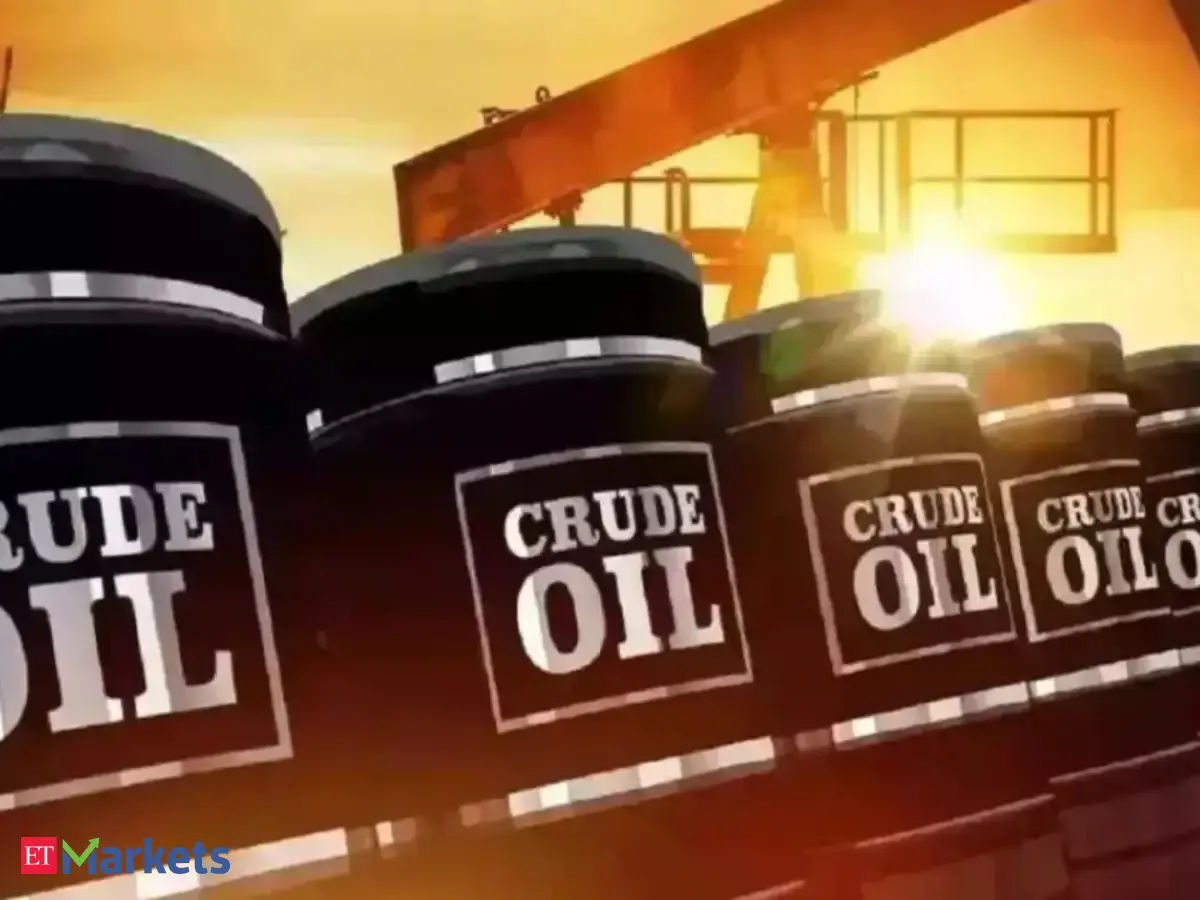
Oil prices fell after Trump said fresh US attacks on Iran were unlikely while talks to end the conflict continue. The decline came despite reports that shipping had been hit in or near the Strait of Hormuz.
8:08 PMEconomic TimesOil extended its largest weekly decline since April 2020 as traders assessed diplomatic efforts to end the US-Iran conflict alongside new attacks in the region.
6:03 PMBloomberg Markets
Scientists warn that global temperatures are nearing an overshoot of the 1.5°C climate target as COP31 begins. They say governments must commit to removing carbon dioxide from the atmosphere if temperatures are to return to safer levels.
7:00 PMNature
Negotiators and national leaders are gathering in Antalya for the United Nations' annual climate talks as global temperatures are expected to breach a key threshold.
5:01 AMThe New York TimesChina will extend its suspension of an additional 24% tariff on US goods for two more months, through January. The existing 10% tariff will remain in place.
11:36 PMBloomberg Markets
Russian attacks on energy infrastructure in Ukraine's Dnipropetrovsk and Kharkiv regions left about 850,000 people without electricity.
7:20 AMAl Jazeera
Gadi Eisenkot, a former military chief and Benjamin Netanyahu’s leading rival, has been given up to six weeks to form Israel’s next coalition. His career and security credentials make him a prominent opposition figure after an inconclusive election.
4:48 PMThe New York TimesSummary
US Secretary of State Marco Rubio said the war with Iran is unpopular but necessary to prevent a nuclear threat, while dismissing Iran's negotiating demands as unrealistic.
By presenting military action as necessary and rejecting Iran's demands, Washington is narrowing the space
Unlock the full First Pass Analysis to get a better understanding of why this story mattersWhy it matters
The administration's position signals that military pressure, rather than compromise, will drive the next phase of the Iran crisis.
Summary
Donald Trump says a land blockade of Iran is now in effect and plans to speak with Chinese President Xi Jinping and Russian President Vladimir Putin about Tehran and denuclearization. Iran has threatened a severe retaliation if the United States resumes attacks.
The conflict is shifting toward coercive diplomacy, with Washington combining economic pressure, military threats and
Unlock the full First Pass Analysis to get a better understanding of why this story mattersWhy it matters
The next phase may depend as much on great-power diplomacy as on battlefield pressure.
Summary
Trump said renewed U.S. strikes on Iran are highly unlikely if negotiations over its nuclear program and the Strait of Hormuz make progress. He also preserved the threat of military action if talks fail or Iran does not meet U.S. expectations.
The administration is using diplomacy and military pressure as linked tools rather than alternatives. That
Unlock the full First Pass Analysis to get a better understanding of why this story mattersWhy it matters
Iran's willingness to negotiate could determine whether the United States returns to strikes and whether tensions around the Strait of Hormuz escalate.
Summary
Washington has announced Task Force Iron Gate to disrupt Iran’s transport of advanced weapons as fears of a wider regional escalation grow. The announcement signals a U.S. effort to target weapons flows before they further intensify the conflict.
The task force shifts U.S. policy toward actively interdicting Iran-linked arms transfers rather than responding
Unlock the full First Pass Analysis to get a better understanding of why this story mattersWhy it matters
A campaign against Iran’s weapons network could deter further attacks or widen the regional confrontation.
Summary
Iranian Foreign Minister Abbas Araghchi said talks with the United States have made no progress and that Tehran is waiting before resuming negotiations.
The talks have stalled, leaving no immediate diplomatic path forward on the issues dividing Tehran
Unlock the full First Pass Analysis to get a better understanding of why this story mattersWhy it matters
A diplomatic freeze removes the main channel for containing escalation between Iran and the United States.
Summary
Iran has threatened a severe military response if the United States expands the war. President Trump says US forces are “locked and loaded” and ready to strike if necessary.
Both sides are signaling readiness for direct escalation, narrowing the space for de-escalation. Any US
Unlock the full First Pass Analysis to get a better understanding of why this story mattersWhy it matters
Mutual threats increase the risk that a single strike or miscalculation will broaden the war across the region.
Summary
Fresh Houthi strikes damaged an Aramco tower in Riyadh’s central financial district, according to footage authenticated by BBC Verify.
The strike brought the conflict directly into Saudi Arabia’s capital and targeted a symbol of
Unlock the full First Pass Analysis to get a better understanding of why this story mattersWhy it matters
Attacks on Saudi economic centers could widen the conflict’s regional and energy-market impact.
3 stories · 3 sources
Summary
Oil prices fell after Trump said fresh US attacks on Iran were unlikely while talks to end the conflict continue. The decline came despite reports that shipping had been hit in or near the Strait of Hormuz.
Markets are pricing the possibility that diplomacy will prevent a wider disruption to Gulf energy
Unlock the full First Pass Analysis to get a better understanding of why this story mattersWhy it matters
Oil prices are being driven by the credibility of de-escalation, not by the disappearance of the underlying supply threat.
Summary
Oil extended its largest weekly decline since April 2020 as traders assessed diplomatic efforts to end the US-Iran conflict alongside new attacks in the region.
Diplomacy is now pushing prices lower, but fresh attacks are limiting confidence that the conflict
Unlock the full First Pass Analysis to get a better understanding of why this story mattersWhy it matters
Energy prices are being driven by the unstable balance between possible diplomacy and continued escalation.
Summary
Scientists warn that global temperatures are nearing an overshoot of the 1.5°C climate target as COP31 begins. They say governments must commit to removing carbon dioxide from the atmosphere if temperatures are to return to safer levels.
The central shift is from preventing 1.5°C warming to managing a likely breach and planning
Unlock the full First Pass Analysis to get a better understanding of why this story mattersWhy it matters
Overshooting 1.5°C would make climate policy depend on both rapid emissions cuts and the uncertain expansion of carbon removal.
Summary
Negotiators and national leaders are gathering in Antalya for the United Nations' annual climate talks as global temperatures are expected to breach a key threshold.
The talks begin with the climate system moving further beyond the conditions that shaped existing
Unlock the full First Pass Analysis to get a better understanding of why this story mattersWhy it matters
A threshold breach would increase the costs of delayed action and test whether governments can turn climate pledges into near-term policy.
Summary
China will extend its suspension of an additional 24% tariff on US goods for two more months, through January. The existing 10% tariff will remain in place.
The extension preserves the trade truce without removing the core tariff burden. US exporters retain
Unlock the full First Pass Analysis to get a better understanding of why this story mattersWhy it matters
The deal reduces near-term trade risk while leaving the broader US-China tariff dispute unresolved.
Summary
Russian attacks on energy infrastructure in Ukraine's Dnipropetrovsk and Kharkiv regions left about 850,000 people without electricity.
The strikes again exposed Ukraine's power system to large-scale disruption, affecting hundreds of thousands of
Unlock the full First Pass Analysis to get a better understanding of why this story mattersWhy it matters
Ukraine's energy infrastructure remains a direct vulnerability with immediate civilian and economic consequences.
Summary
Gadi Eisenkot, a former military chief and Benjamin Netanyahu’s leading rival, has been given up to six weeks to form Israel’s next coalition. His career and security credentials make him a prominent opposition figure after an inconclusive election.
Eisenkot’s mandate converts his military stature into a test of political coalition-building, where personal credibility
Unlock the full First Pass Analysis to get a better understanding of why this story mattersWhy it matters
Eisenkot’s coalition effort will determine whether Israel’s opposition can turn its challenge to Netanyahu into actual control of government.
2 stories · 2 sources
A curated list of other prominent stories from this day.

Pope Leo XIV urged Argentina to protect democracy and warned that leaders should recognize limits on their power during an address with President Javier Milei.
11:52 PMAl Jazeera
Moldova has launched a new electricity connection to Romania, with President Maia Sandu saying two more power lines are planned.
9:35 PMAl Jazeera
Nvidia CEO Jensen Huang has acknowledged an affair with a woman suspected of spying for China. The relationship has prompted an espionage investigation.
6:58 PMAl Jazeera
A sand cliff collapsed onto displaced families in Gaza, causing deaths among people sheltering in the area.
4:05 PMAl Jazeera
Hundreds of thousands of people joined a protest in Amsterdam calling for tougher trade restrictions on Israel and an end to all arms sales. The demonstration reflects growing public pressure for the Dutch government to change its policy toward Israel.
12:44 PMAl Jazeera
Israeli forces released Palestinian journalist Abed Abou Shhadeh after detaining him. He said the detention formed part of political measures intended to intimidate Arab society as a whole.
11:18 AMAl Jazeera
Palestinian journalist Abed Abou Shhadeh was released after five days in Israeli detention. His detention drew attention to the treatment of Palestinian journalists and political voices.
9:53 AMAl Jazeera
Egypt has reopened its embassy in Tripoli after a 12-year closure. The move restores formal diplomatic representation in Libya's capital.
10:47 AMAl Jazeera
Egypt has reopened its embassy in Tripoli as rival Libyan factions push toward a unity government after years of conflict. The move suggests Cairo is recalibrating its engagement with western Libya’s political authorities.
8:27 AMAl JazeeraU.S., Ukrainian and Russian delegations are scheduled to meet in Abu Dhabi on November 10 and 11 as Washington renews efforts to negotiate an end to Russia’s war in Ukraine. Steve Witkoff and Jared Kushner are expected to represent the United States, while a Democratic-controlled Congress could increase scrutiny of the administration’s foreign policy.
9:05 AMBloomberg MarketsThe U.S. midterm results drew close attention in Moscow and Beijing. Correspondents discuss how officials and publics in both countries interpret the outcome and its implications for U.S. policy.
8:34 AMNPR Politics
Russia is accelerating development of a domestic satellite communications network modeled on Starlink. The system would support more effective drone operations deep inside Ukraine.
12:00 AMFinancial TimesSummary
Pope Leo XIV urged Argentina to protect democracy and warned that leaders should recognize limits on their power during an address with President Javier Milei.
The pope's message places institutional checks and democratic accountability at the center of his engagement
Unlock the full First Pass Analysis to get a better understanding of why this story mattersWhy it matters
The remarks add moral and international pressure for Argentina's government to respect democratic constraints.
2 stories · 2 sources
Summary
Moldova has launched a new electricity connection to Romania, with President Maia Sandu saying two more power lines are planned.
The new link advances Moldova's effort to replace Russian energy dependence with access to Romania
Unlock the full First Pass Analysis to get a better understanding of why this story mattersWhy it matters
Moldova is turning energy infrastructure into a core instrument of national security and European integration.
Summary
Nvidia CEO Jensen Huang has acknowledged an affair with a woman suspected of spying for China. The relationship has prompted an espionage investigation.
The key shift is that a personal relationship involving a major technology executive now carries
Unlock the full First Pass Analysis to get a better understanding of why this story mattersWhy it matters
The case shows how personal ties can become a security concern when they involve leaders of strategically important technology companies.
Summary
A sand cliff collapsed onto displaced families in Gaza, causing deaths among people sheltering in the area.
The collapse adds another lethal hazard for civilians forced into precarious displacement conditions. It also
Unlock the full First Pass Analysis to get a better understanding of why this story mattersWhy it matters
Displaced civilians face deadly exposure even outside active combat zones.
Summary
Hundreds of thousands of people joined a protest in Amsterdam calling for tougher trade restrictions on Israel and an end to all arms sales. The demonstration reflects growing public pressure for the Dutch government to change its policy toward Israel.
The protest pushes the issue from street mobilization into a direct test of Dutch foreign
Unlock the full First Pass Analysis to get a better understanding of why this story mattersWhy it matters
Mass support for economic and military restrictions could make Israel policy a sharper political liability for European governments.
Summary
Israeli forces released Palestinian journalist Abed Abou Shhadeh after detaining him. He said the detention formed part of political measures intended to intimidate Arab society as a whole.
His release ends the immediate detention but leaves the broader question of using security powers
Unlock the full First Pass Analysis to get a better understanding of why this story mattersWhy it matters
The case may intensify scrutiny of Israel's detention practices and the space available for Palestinian political and media activity.
Summary
Palestinian journalist Abed Abou Shhadeh was released after five days in Israeli detention. His detention drew attention to the treatment of Palestinian journalists and political voices.
The five-day detention ended without removing the underlying pressure on Palestinian media and political activity.
Unlock the full First Pass Analysis to get a better understanding of why this story mattersWhy it matters
The case adds to concerns that detention is being used to restrict journalism and political expression.
Summary
Egypt has reopened its embassy in Tripoli after a 12-year closure. The move restores formal diplomatic representation in Libya's capital.
The reopening signals deeper Egyptian engagement with western Libya and a willingness to manage relations
Unlock the full First Pass Analysis to get a better understanding of why this story mattersWhy it matters
Egypt's return to Tripoli gives diplomacy a stronger role in a fragmented Libyan political arena.
Summary
Egypt has reopened its embassy in Tripoli as rival Libyan factions push toward a unity government after years of conflict. The move suggests Cairo is recalibrating its engagement with western Libya’s political authorities.
The reopening gives Egypt a direct channel into Tripoli and weakens the separation between its
Unlock the full First Pass Analysis to get a better understanding of why this story mattersWhy it matters
Egypt’s diplomatic reset could affect the prospects for Libyan reunification and the regional competition surrounding the country.
Summary
U.S., Ukrainian and Russian delegations are scheduled to meet in Abu Dhabi on November 10 and 11 as Washington renews efforts to negotiate an end to Russia’s war in Ukraine. Steve Witkoff and Jared Kushner are expected to represent the United States, while a Democratic-controlled Congress could increase scrutiny of the administration’s foreign policy.
The talks put diplomacy back on the calendar, but they also expose the process to
Unlock the full First Pass Analysis to get a better understanding of why this story mattersWhy it matters
The meeting could shape both the next phase of U.S. diplomacy and the domestic political limits on any Ukraine deal.
Summary
The U.S. midterm results drew close attention in Moscow and Beijing. Correspondents discuss how officials and publics in both countries interpret the outcome and its implications for U.S. policy.
The elections are being read abroad as a test of American political stability and future
Unlock the full First Pass Analysis to get a better understanding of why this story mattersWhy it matters
Foreign governments are already recalibrating around the policy limits and political signals produced by the U.S. vote.
Summary
Russia is accelerating development of a domestic satellite communications network modeled on Starlink. The system would support more effective drone operations deep inside Ukraine.
The decisive shift is Russia’s effort to close a battlefield communications gap through its own
Unlock the full First Pass Analysis to get a better understanding of why this story mattersWhy it matters
The contest over satellite networks is becoming a direct contest over the effectiveness and reach of modern warfare.
Make it yours
Pick your topics, set your cadence, and receive your personalized First Pass in your inbox. It’s that simple!


