
The US and Iranian foreign ministers say diplomacy can still end the war. Their comments signal that negotiations remain open despite ongoing hostilities.
11:24 PMAl Jazeera49 stories from 7 sources
Supporting Articles
The US and Iranian foreign ministers say diplomacy can still end the war. Their comments signal that negotiations remain open despite ongoing hostilities.
11:24 PMAl Jazeera
Iranian Foreign Minister Abbas Araghchi described US outreach as a positive step while saying Tehran remains prepared for all scenarios and does not rule out an attack. An Iranian delegation is in Qatar for talks aimed at reducing the immediate risk of conflict.
10:31 AMAl Jazeera
Qatari mediators held more than 12 hours of talks in Tehran on Friday in an effort to restart direct negotiations between the United States and Iran and avert renewed American-led attacks, according to a report citing a source.
9:47 AMCNBC
Iran’s Supreme Leader Ayatollah Ali Khamenei told military commanders that any attack would trigger an immediate response without geographical limits, as Qatari mediators worked to prevent a feared US-Israeli bombing campaign.
9:38 AMFinancial Times
Iran's foreign minister says Tehran and Qatar have reached a plan to reopen the Strait of Hormuz within two days if the United States meets Iran's conditions.
8:00 PMAl Jazeera
Residents evacuated from Russian-occupied Oleshky have reached Ukrainian-controlled territory after months of isolation, hunger, and exhaustion. Some residents remain behind, leaving families divided and the evacuation incomplete.
11:37 PMAl JazeeraSecretary of State Marco Rubio defended the decision to include Russia in this year’s G20 meetings despite criticism from the European Union and other allies. He said continued dialogue is necessary to end the war in Ukraine.
4:41 PMBloomberg MarketsG20 foreign ministers ended their Atlanta meeting without a joint communique. The group will instead rely on a chairman's statement, which US Secretary of State Marco Rubio said he would release Saturday.
3:04 PMCNBCEU foreign policy chief Kaja Kallas warned that inviting Vladimir Putin to a December G20 summit in Florida could legitimize Russia’s return to international forums while its war in Ukraine continues.
10:11 AMBloomberg MarketsKaja Kallas said Russia is escalating its war in Ukraine and is not negotiating seriously, while criticizing Russian Foreign Minister Sergei Lavrov’s statements at a G20 meeting. She also addressed diplomacy with Iran and closer EU cooperation with Canada on trade, energy and defense.
9:15 AMBloomberg Markets
The United States approved a $2.1 billion sale of Patriot interceptors to Ukraine after President Volodymyr Zelenskyy accused the Trump administration of delaying critical weapons as bilateral relations worsened.
3:04 AMFinancial Times
Joseph Kabila, the former president of the Democratic Republic of the Congo, has launched a new rebel movement. The development raises questions about his aims and the consequences for the country's already unstable security environment.
12:32 AMBBC
Turkish President Recep Tayyip Erdogan urged Russia and Ukraine to halt attacks in the Black Sea while hosting Ukrainian President Volodymyr Zelenskyy in Istanbul. The two leaders agreed to work on a new Black Sea grain corridor.
4:09 PMAl Jazeera
At least four Palestinians were killed in Israeli attacks in Gaza, including shelling near the Nuseirat refugee camp. The strikes came as military operations continued across the territory.
1:49 PMAl JazeeraSummary
The US and Iranian foreign ministers say diplomacy can still end the war. Their comments signal that negotiations remain open despite ongoing hostilities.
The diplomatic channel matters because it offers the only route to stop escalation without imposing
Unlock the full First Pass Analysis to get a better understanding of why this story mattersWhy it matters
Whether diplomacy survives the conflict will determine if the war remains limited or expands across the region.
Summary
Iranian Foreign Minister Abbas Araghchi described US outreach as a positive step while saying Tehran remains prepared for all scenarios and does not rule out an attack. An Iranian delegation is in Qatar for talks aimed at reducing the immediate risk of conflict.
Iran is combining conditional openness to diplomacy with explicit military preparedness, using both signals to
Unlock the full First Pass Analysis to get a better understanding of why this story mattersWhy it matters
Tehran’s mixed message keeps diplomacy alive without removing the possibility of rapid escalation.
Summary
Qatari mediators held more than 12 hours of talks in Tehran on Friday in an effort to restart direct negotiations between the United States and Iran and avert renewed American-led attacks, according to a report citing a source.
The length and urgency of the talks suggest that backchannel diplomacy is operating against a
Unlock the full First Pass Analysis to get a better understanding of why this story mattersWhy it matters
The talks could determine whether the current confrontation moves toward negotiation or a wider regional conflict.
Summary
Iran’s Supreme Leader Ayatollah Ali Khamenei told military commanders that any attack would trigger an immediate response without geographical limits, as Qatari mediators worked to prevent a feared US-Israeli bombing campaign.
Tehran is signaling that it would expand the battlefield beyond Iran if attacked, raising the
Unlock the full First Pass Analysis to get a better understanding of why this story mattersWhy it matters
A strike could trigger retaliation across multiple theaters rather than remain a contained exchange.
Summary
Iran's foreign minister says Tehran and Qatar have reached a plan to reopen the Strait of Hormuz within two days if the United States meets Iran's conditions.
The proposed reopening makes the waterway's access a direct bargaining tool in negotiations with Washington.
Unlock the full First Pass Analysis to get a better understanding of why this story mattersWhy it matters
A conditional reopening could quickly ease pressure on global energy flows, but it also leaves the supply route exposed to further escalation.
Summary
Residents evacuated from Russian-occupied Oleshky have reached Ukrainian-controlled territory after months of isolation, hunger, and exhaustion. Some residents remain behind, leaving families divided and the evacuation incomplete.
The evacuations expose the humanitarian cost of prolonged occupation and the limited reach of Ukraine's
Unlock the full First Pass Analysis to get a better understanding of why this story mattersWhy it matters
Civilian evacuation is becoming a test of Ukraine's ability to protect people trapped behind the front line.
6 stories · 3 sources
Summary
Secretary of State Marco Rubio defended the decision to include Russia in this year’s G20 meetings despite criticism from the European Union and other allies. He said continued dialogue is necessary to end the war in Ukraine.
The US is prioritizing diplomatic access over allied pressure to isolate Moscow. That choice could
Unlock the full First Pass Analysis to get a better understanding of why this story mattersWhy it matters
The decision signals that Washington is shifting toward engagement with Moscow even when that complicates coordination with its allies.
Summary
G20 foreign ministers ended their Atlanta meeting without a joint communique. The group will instead rely on a chairman's statement, which US Secretary of State Marco Rubio said he would release Saturday.
The failure to agree on a communique shows that divisions remain too deep for the
Unlock the full First Pass Analysis to get a better understanding of why this story mattersWhy it matters
The G20's inability to agree publicly weakens its role as a forum for coordinated diplomatic action.
Summary
EU foreign policy chief Kaja Kallas warned that inviting Vladimir Putin to a December G20 summit in Florida could legitimize Russia’s return to international forums while its war in Ukraine continues.
Putin’s possible attendance would test whether major powers are willing to separate diplomatic engagement from
Unlock the full First Pass Analysis to get a better understanding of why this story mattersWhy it matters
The G20 could become a venue for Russia’s diplomatic rehabilitation before the war has ended or accountability has advanced.
Summary
Kaja Kallas said Russia is escalating its war in Ukraine and is not negotiating seriously, while criticizing Russian Foreign Minister Sergei Lavrov’s statements at a G20 meeting. She also addressed diplomacy with Iran and closer EU cooperation with Canada on trade, energy and defense.
Kallas is arguing that continued diplomatic access should not be mistaken for a Russian commitment
Unlock the full First Pass Analysis to get a better understanding of why this story mattersWhy it matters
The EU is trying to preserve pressure on Moscow while building partnerships that reduce its vulnerability across multiple security fronts.
Summary
The United States approved a $2.1 billion sale of Patriot interceptors to Ukraine after President Volodymyr Zelenskyy accused the Trump administration of delaying critical weapons as bilateral relations worsened.
The approval restores access to a key defensive system but does not erase the political
Unlock the full First Pass Analysis to get a better understanding of why this story mattersWhy it matters
The sale strengthens Ukraine’s air defenses while revealing that weapons access remains tied to an increasingly volatile US-Ukraine relationship.
Summary
Joseph Kabila, the former president of the Democratic Republic of the Congo, has launched a new rebel movement. The development raises questions about his aims and the consequences for the country's already unstable security environment.
Kabila's shift from head of state to rebel leader could deepen the conflict and pull
Unlock the full First Pass Analysis to get a better understanding of why this story mattersWhy it matters
Kabila's return to armed politics could destabilize the DRC's political system and complicate regional peace efforts.
Summary
Turkish President Recep Tayyip Erdogan urged Russia and Ukraine to halt attacks in the Black Sea while hosting Ukrainian President Volodymyr Zelenskyy in Istanbul. The two leaders agreed to work on a new Black Sea grain corridor.
The proposed corridor links maritime security to food access and gives Turkiye another channel for
Unlock the full First Pass Analysis to get a better understanding of why this story mattersWhy it matters
A functioning corridor could ease pressure on food supplies while creating limited space for broader negotiations.
Summary
At least four Palestinians were killed in Israeli attacks in Gaza, including shelling near the Nuseirat refugee camp. The strikes came as military operations continued across the territory.
The deaths show that civilian risk remains high despite repeated diplomatic efforts to limit or
Unlock the full First Pass Analysis to get a better understanding of why this story mattersWhy it matters
Continued casualties make any ceasefire effort more urgent and harder to sustain politically.
A curated list of other prominent stories from this day.

Indigenous communities in Arunachal Pradesh are protesting a planned mega dam intended to counter China's upstream hydropower project. The project places India's strategic competition with China against local opposition to its social and environmental costs.
11:19 PMAl Jazeera
Allegations by Israel that Qatar interfered in an election have been rejected. The dispute adds to tensions between the two countries and challenges Israel's account of Qatar's conduct.
4:24 PMAl Jazeera
Iranian leaders do not expect Israel's or the United States' policy toward Iran to change substantially after their elections. Israel's prime minister is seeking to preserve his political position, while the US president faces a difficult midterm contest.
4:04 PMThe New York Times
Olive harvesting in the occupied West Bank has become dangerous for Palestinians as Israeli settlers attack or obstruct farmers. Palestinians now face the prospect of being treated as trespassers on land they cultivate.
3:18 PMAl Jazeera
Syria is considering joining a mutual defense agreement involving Saudi Arabia, Turkey and Pakistan as the war in Yemen intensifies. The decision could place Syria within a broader security arrangement centered on Saudi Arabia's confrontation with the Iran-backed Houthis.
1:56 PMThe New York Times
Countries renewed commitments to protect wildlife at U.N. biodiversity talks in Armenia. Negotiators still face an unresolved dispute over how to finance those commitments.
1:40 PMThe New York TimesSenegal’s parliament rejected the government’s revised 2026 finance law for a second time, extending a political standoff that threatens to delay approval of a crucial IMF program.
8:27 AMBloomberg MarketsHKT has agreed to stop operating in the United States after the Federal Communications Commission moved to revoke its authorization over national security concerns.
4:05 AMCNBC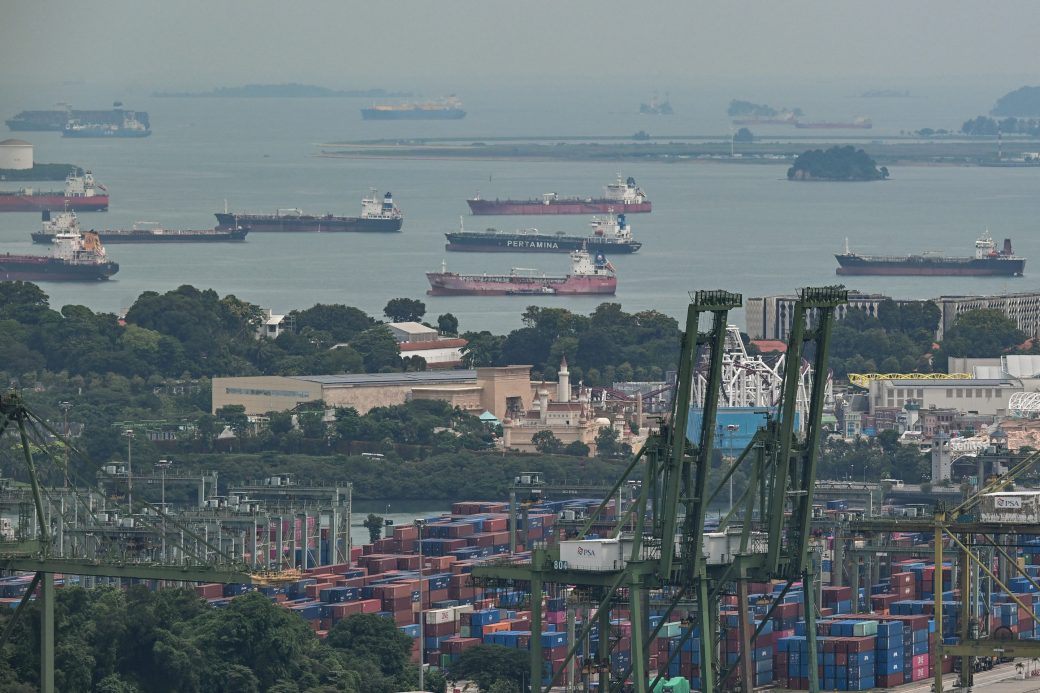
Southeast Asian countries have a shared interest in protecting international law as they pursue greater commercial opportunity. Doing so may create friction with the country that violates those rules, amid intensifying geopolitical rivalry.
1:00 AMFortuneSummary
Indigenous communities in Arunachal Pradesh are protesting a planned mega dam intended to counter China's upstream hydropower project. The project places India's strategic competition with China against local opposition to its social and environmental costs.
The project cannot be treated as only an energy or security investment. Indigenous resistance could
Unlock the full First Pass Analysis to get a better understanding of why this story mattersWhy it matters
India's attempt to use infrastructure as a counterweight to China could be slowed by the communities and terrain it depends on.
Summary
Allegations by Israel that Qatar interfered in an election have been rejected. The dispute adds to tensions between the two countries and challenges Israel's account of Qatar's conduct.
The rejection removes immediate credibility from Israel's claim unless supporting evidence emerges. The episode also
Unlock the full First Pass Analysis to get a better understanding of why this story mattersWhy it matters
Unresolved accusations between Israel and Qatar could complicate diplomacy in an already volatile region.
Summary
Iranian leaders do not expect Israel's or the United States' policy toward Iran to change substantially after their elections. Israel's prime minister is seeking to preserve his political position, while the US president faces a difficult midterm contest.
Iran is planning around policy continuity rather than electoral change, suggesting that deterrence and escalation
Unlock the full First Pass Analysis to get a better understanding of why this story mattersWhy it matters
If Tehran expects elections to change little, it may prepare for a prolonged regional conflict instead of betting on a diplomatic reset.
Summary
Olive harvesting in the occupied West Bank has become dangerous for Palestinians as Israeli settlers attack or obstruct farmers. Palestinians now face the prospect of being treated as trespassers on land they cultivate.
Settler violence is turning a seasonal livelihood into a security risk and restricting Palestinian access
Unlock the full First Pass Analysis to get a better understanding of why this story mattersWhy it matters
Restrictions on olive harvests threaten both Palestinian incomes and the ability of communities to remain on their land.
Summary
Syria is considering joining a mutual defense agreement involving Saudi Arabia, Turkey and Pakistan as the war in Yemen intensifies. The decision could place Syria within a broader security arrangement centered on Saudi Arabia's confrontation with the Iran-backed Houthis.
Syria's participation would widen the coalition's geographic and political reach while tying Damascus to Saudi
Unlock the full First Pass Analysis to get a better understanding of why this story mattersWhy it matters
Syria's choice could expand the Yemen war's regional footprint and reshape emerging security alignments.
Summary
Countries renewed commitments to protect wildlife at U.N. biodiversity talks in Armenia. Negotiators still face an unresolved dispute over how to finance those commitments.
The central obstacle is funding, not agreement on the need to protect biodiversity. Developing countries
Unlock the full First Pass Analysis to get a better understanding of why this story mattersWhy it matters
Biodiversity targets will depend on whether governments turn political commitments into funded programs.
Summary
Senegal’s parliament rejected the government’s revised 2026 finance law for a second time, extending a political standoff that threatens to delay approval of a crucial IMF program.
The repeated rejection puts the government’s financing plan and fiscal credibility under immediate pressure. A
Unlock the full First Pass Analysis to get a better understanding of why this story mattersWhy it matters
Senegal risks turning a legislative dispute into a funding and confidence crisis.
Summary
HKT has agreed to stop operating in the United States after the Federal Communications Commission moved to revoke its authorization over national security concerns.
The agreement turns a regulatory threat into a forced retreat for a Hong Kong-linked telecom
Unlock the full First Pass Analysis to get a better understanding of why this story mattersWhy it matters
The case shows national security reviews increasingly reaching into commercial telecom access.
Summary
Southeast Asian countries have a shared interest in protecting international law as they pursue greater commercial opportunity. Doing so may create friction with the country that violates those rules, amid intensifying geopolitical rivalry.
The region's economic ambitions depend on stable rules for trade, investment, and maritime access, but
Unlock the full First Pass Analysis to get a better understanding of why this story mattersWhy it matters
The region's ability to protect its commercial growth will depend on whether it can preserve strategic autonomy without abandoning shared rules.
Make it yours
Pick your topics, set your cadence, and receive your personalized First Pass in your inbox. It’s that simple!


