
Donald Trump said the conflict with Iran would end on his terms as reported US costs rose to $47 billion. The remarks signal no immediate timetable for ending the war.
11:02 PMCNBC74 stories from 9 sources
Supporting Articles
Donald Trump said the conflict with Iran would end on his terms as reported US costs rose to $47 billion. The remarks signal no immediate timetable for ending the war.
11:02 PMCNBC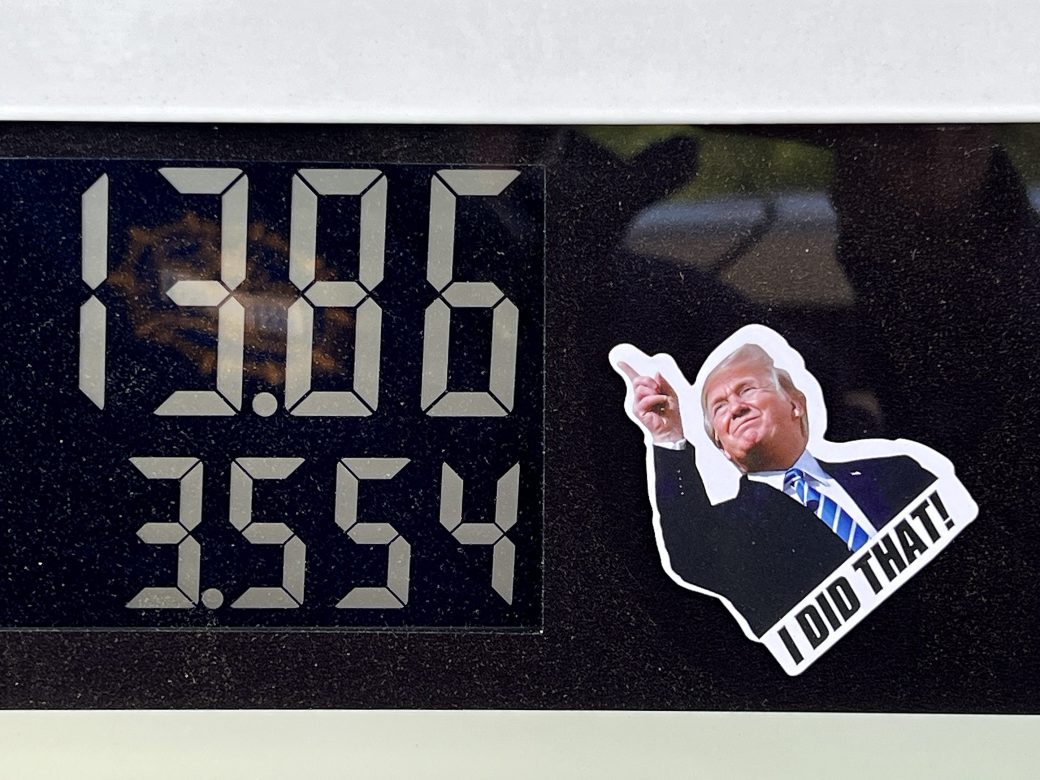
Nearly eight months into the war in Iran, President Trump is defending high gas prices as a necessary cost of the conflict. The resulting voter frustration is complicating Republicans’ effort to retain control of Congress.
10:19 AMFortune
Oil prices rose after a Houthi attack on a major Saudi refinery heightened fears of supply disruptions. Analysts offered differing forecasts, with prices potentially moving higher if attacks continue or production is impaired.
10:07 PMEconomic TimesSaudi Arabia contained a fire near Ras Tanura, its biggest oil-export terminal, after an attack in the region. The incident was reported by a person familiar with the matter.
4:25 AMBloomberg Markets
The White House has discussed restoring business ties between Russia and major US oil companies as part of efforts to bring President Vladimir Putin into negotiations over Ukraine. The proposal would use postwar economic incentives to support diplomacy.
3:06 PMFinancial Times
President Trump is considering lifting sanctions on Russia’s flagship investment fund as part of an effort to secure an end to the war in Ukraine. The proposal would represent another US economic concession to Moscow.
1:30 PMThe New York Times
Millions of people in Sudan face acute hunger as fighting disrupts food supplies and drought worsens conditions. Funding cuts are limiting the humanitarian response while the war continues.
11:41 AMBBC
Syria and Jordan reopened their border while their foreign ministers established a security committee to exchange intelligence and investigate the effects of Jordanian air strikes in Syria. The arrangement seeks to contain tensions after the attacks caused deaths.
11:10 PMAl Jazeera
Jordanian airstrikes on Syria reportedly killed seven civilians after an attack on a church in southern Jordan, according to Syrian state media and the Jordanian military. The strikes risk worsening relations between the neighbouring countries.
2:33 PMThe New York Times
European leaders disagree over diplomatic outreach to Vladimir Putin as part of efforts to advance negotiations over the war in Ukraine. Some support direct contact, while others oppose a call that could legitimize or reward Moscow.
4:49 PMThe New York Times
Vladimir Putin spoke with the leaders of Norway and Finland, marking their first contact at this level in more than a year. The calls came as Russia and Ukraine prepared for US-brokered peace talks.
2:50 PMFinancial Times
Russia and Ukraine extended a ceasefire in Ukraine’s Kherson region, initially arranged to help stranded residents of Oleshky. Officials said they had reported no breaches.
6:11 PMBBC
Residents of Russian-occupied Oleshky have lived without electricity, gas or running water for three years and reportedly resorted to eating weeds. The account places the reported truce against a backdrop of prolonged deprivation in the occupied city.
4:42 PMBBC
Russia and Ukraine began a local ceasefire in Oleshky to evacuate residents cut off from food and medicine. The arrangement is intended as a humanitarian truce rather than a broader suspension of hostilities.
8:33 AMFinancial TimesA local ceasefire in Oleshky began as Russia continued missile and drone attacks on Ukrainian cities. The truce was brokered by Melania Trump and appears focused on a limited area rather than a broader halt in fighting.
7:18 AMCNBCExit polls show no party or bloc securing a clear majority in Israel’s election, leaving Benjamin Netanyahu’s political future uncertain. Coalition negotiations could take weeks before a governing leader emerges.
6:54 PMCNBC
Israeli elections determine the government and policies that shape Palestinians’ security, movement, land rights and daily lives, while Palestinians affected by those decisions do not vote in the elections. The political system therefore gives Israeli voters authority over people excluded from the national electorate.
3:18 PMThe New York Times
Israelis are voting in an election shaped by competing concerns over security and democracy, with neither leading political bloc expected to secure a clear majority.
1:39 PMBBCSummary
Donald Trump said the conflict with Iran would end on his terms as reported US costs rose to $47 billion. The remarks signal no immediate timetable for ending the war.
The decisive change is the widening gap between presidential control over the war and its
Unlock the full First Pass Analysis to get a better understanding of why this story mattersWhy it matters
An open-ended war is becoming both a fiscal burden and a test of Trump's claims to control escalation.
Summary
Nearly eight months into the war in Iran, President Trump is defending high gas prices as a necessary cost of the conflict. The resulting voter frustration is complicating Republicans’ effort to retain control of Congress.
High gas prices have turned the war from a foreign-policy issue into a direct economic
Unlock the full First Pass Analysis to get a better understanding of why this story mattersWhy it matters
The war’s domestic political cost could threaten Republican control of Congress.
Summary
Oil prices rose after a Houthi attack on a major Saudi refinery heightened fears of supply disruptions. Analysts offered differing forecasts, with prices potentially moving higher if attacks continue or production is impaired.
The immediate shift is from market concern to a concrete risk that Middle East attacks
Unlock the full First Pass Analysis to get a better understanding of why this story mattersWhy it matters
Any prolonged threat to Saudi production would raise energy costs and add inflationary pressure well beyond the region.
Summary
Saudi Arabia contained a fire near Ras Tanura, its biggest oil-export terminal, after an attack in the region. The incident was reported by a person familiar with the matter.
The immediate disruption appears limited, but the location raises the risk premium around Gulf energy
Unlock the full First Pass Analysis to get a better understanding of why this story mattersWhy it matters
A contained fire near a major export hub shows how quickly regional conflict can threaten global oil supply.
Summary
The White House has discussed restoring business ties between Russia and major US oil companies as part of efforts to bring President Vladimir Putin into negotiations over Ukraine. The proposal would use postwar economic incentives to support diplomacy.
Washington is treating access to Western capital and energy partnerships as bargaining tools in the
Unlock the full First Pass Analysis to get a better understanding of why this story mattersWhy it matters
Economic concessions could reshape the negotiating balance and test US coordination with Ukraine and its European allies.
Summary
President Trump is considering lifting sanctions on Russia’s flagship investment fund as part of an effort to secure an end to the war in Ukraine. The proposal would represent another US economic concession to Moscow.
The administration is expanding its use of sanctions relief as a negotiating incentive. That could
Unlock the full First Pass Analysis to get a better understanding of why this story mattersWhy it matters
The decision would signal how far Washington is willing to go economically to pursue a Ukraine settlement.
Summary
Millions of people in Sudan face acute hunger as fighting disrupts food supplies and drought worsens conditions. Funding cuts are limiting the humanitarian response while the war continues.
The famine risk is growing because conflict, climate stress and reduced aid are reinforcing one
Unlock the full First Pass Analysis to get a better understanding of why this story mattersWhy it matters
A preventable food crisis could become a regional emergency if aid shortfalls persist.
Summary
Syria and Jordan reopened their border while their foreign ministers established a security committee to exchange intelligence and investigate the effects of Jordanian air strikes in Syria. The arrangement seeks to contain tensions after the attacks caused deaths.
The reopening indicates that both governments want to preserve cross-border trade and security coordination despite
Unlock the full First Pass Analysis to get a better understanding of why this story mattersWhy it matters
The border deal offers a fragile channel for stabilizing one of Syria's most sensitive regional frontiers.
Summary
Jordanian airstrikes on Syria reportedly killed seven civilians after an attack on a church in southern Jordan, according to Syrian state media and the Jordanian military. The strikes risk worsening relations between the neighbouring countries.
Jordan’s retaliation expands a security incident into a bilateral crisis and raises the risk of
Unlock the full First Pass Analysis to get a better understanding of why this story mattersWhy it matters
A breakdown in Jordan-Syria relations could destabilise an already fragile border and complicate regional security efforts.
Summary
European leaders disagree over diplomatic outreach to Vladimir Putin as part of efforts to advance negotiations over the war in Ukraine. Some support direct contact, while others oppose a call that could legitimize or reward Moscow.
The dispute exposes a widening gap over whether diplomacy should precede concrete Russian concessions. Continued
Unlock the full First Pass Analysis to get a better understanding of why this story mattersWhy it matters
European unity on the Ukraine strategy is becoming a constraint on any coordinated peace initiative.
Summary
Vladimir Putin spoke with the leaders of Norway and Finland, marking their first contact at this level in more than a year. The calls came as Russia and Ukraine prepared for US-brokered peace talks.
The renewed contact suggests European governments are reopening direct channels with Moscow as diplomacy accelerates.
Unlock the full First Pass Analysis to get a better understanding of why this story mattersWhy it matters
Direct talks with Moscow may widen the diplomatic track around the US-led peace effort.
2 stories · 2 sources
Summary
Russia and Ukraine extended a ceasefire in Ukraine’s Kherson region, initially arranged to help stranded residents of Oleshky. Officials said they had reported no breaches.
The extension shows that limited humanitarian agreements can survive even while the broader war continues.
Unlock the full First Pass Analysis to get a better understanding of why this story mattersWhy it matters
The truce could help civilians trapped by fighting while offering a limited test of whether local arrangements can hold.
Summary
Residents of Russian-occupied Oleshky have lived without electricity, gas or running water for three years and reportedly resorted to eating weeds. The account places the reported truce against a backdrop of prolonged deprivation in the occupied city.
A local truce does not amount to humanitarian recovery when basic services remain absent for
Unlock the full First Pass Analysis to get a better understanding of why this story mattersWhy it matters
The case shows that a truce can stop violence without restoring the basic conditions needed for civilian survival.
Summary
Russia and Ukraine began a local ceasefire in Oleshky to evacuate residents cut off from food and medicine. The arrangement is intended as a humanitarian truce rather than a broader suspension of hostilities.
The immediate test is whether the truce can deliver civilians and aid through an active
Unlock the full First Pass Analysis to get a better understanding of why this story mattersWhy it matters
A functioning evacuation corridor could reduce civilian suffering and provide a rare measure of practical cooperation.
Summary
A local ceasefire in Oleshky began as Russia continued missile and drone attacks on Ukrainian cities. The truce was brokered by Melania Trump and appears focused on a limited area rather than a broader halt in fighting.
The ceasefire has not translated into a wider reduction in Russian attacks. Its immediate value
Unlock the full First Pass Analysis to get a better understanding of why this story mattersWhy it matters
The episode tests whether narrow humanitarian truces can function while national-level hostilities continue.
Summary
Exit polls show no party or bloc securing a clear majority in Israel’s election, leaving Benjamin Netanyahu’s political future uncertain. Coalition negotiations could take weeks before a governing leader emerges.
The election shifted leverage from voters to coalition negotiators. Netanyahu must now assemble partners or
Unlock the full First Pass Analysis to get a better understanding of why this story mattersWhy it matters
The result preserves uncertainty over Israel’s leadership and the direction of its domestic and regional policy.
Summary
Israeli elections determine the government and policies that shape Palestinians’ security, movement, land rights and daily lives, while Palestinians affected by those decisions do not vote in the elections. The political system therefore gives Israeli voters authority over people excluded from the national electorate.
The decisive fact is the mismatch between political power and political participation. Israeli parties can
Unlock the full First Pass Analysis to get a better understanding of why this story mattersWhy it matters
The arrangement makes Israeli elections a central determinant of Palestinian life without giving Palestinians an equivalent democratic channel to influence the result.
Summary
Israelis are voting in an election shaped by competing concerns over security and democracy, with neither leading political bloc expected to secure a clear majority.
The likely absence of a majority shifts the contest from election day to coalition bargaining.
Unlock the full First Pass Analysis to get a better understanding of why this story mattersWhy it matters
A fragmented result could extend political paralysis during a period of heightened security and institutional strain.
A curated list of other prominent stories from this day.

A court ordered Mada Masr, one of Egypt’s few independent media outlets, to close for allegedly operating without a license. The outlet’s editor in chief was also detained.
10:38 PMThe New York Times
US envoy Mike Waltz repeatedly told Cuba's UN delegation, “This is America,” during a heated exchange at UN headquarters. The confrontation underscored the sharp political divide between Washington and Havana.
8:25 PMAl Jazeera
Iranian President Masoud Pezeshkian said Middle Eastern countries can resolve their own disputes without US involvement. He made the remarks at a summit of gas-exporting countries in Russia.
6:29 PMAl JazeeraEl Salvador has expanded its troop presence in Haiti to at least 600 personnel as it searches for four soldiers who were kidnapped. The deployment reflects President Nayib Bukele's effort to recover them amid Haiti's wider security crisis.
6:23 PMBloomberg Markets
Donald Trump is highlighting Venezuelan oil as he campaigns in Texas. He is tying the Venezuela operation to voters' concerns about affordability as the war with Iran raises the political stakes around energy and prices.
5:28 PMAl Jazeera
Officials from Saudi Arabia, Pakistan, Turkey and Iran met in Iran to discuss regional security. The meeting raises the prospect of a framework shaped by regional powers rather than outside guarantors.
5:14 PMAl Jazeera
An Israeli military operation and lockdown in Hebron disrupted Palestinian daily life and forced a groom to postpone his wedding. The episode illustrates how military restrictions affect ordinary events as well as movement and security.
5:12 PMAl Jazeera
Elon Musk claims Ukraine’s military used Starlink for offensive drone strikes, violating the service’s terms, and says the relevant loophole was closed before a reported slowdown. Ukrainian officials deny the allegation and dispute the account of what happened.
3:24 PMThe Verge
Brazil's Liberal Party accepted the result of the country's presidential election, while US President Donald Trump questioned its legitimacy after voting hours were extended. Trump offered no evidence for his claim that the election was rigged.
8:47 AMFinancial Times
Three Russian diesel tankers are headed for the United States, including two vessels under sanctions, under a deal linked to Donald Trump and Vladimir Putin aimed at easing fuel prices. The arrangement is exposing participating companies to possible legal challenges from Congress.
8:05 AMFinancial TimesChina is preparing a new round of Middle East diplomacy aimed at reducing tensions and reviving talks to prevent renewed US and Israeli strikes against Iran.
3:48 AMBloomberg MarketsSummary
A court ordered Mada Masr, one of Egypt’s few independent media outlets, to close for allegedly operating without a license. The outlet’s editor in chief was also detained.
The ruling removes a rare independent platform and gives authorities a legal mechanism to tighten
Unlock the full First Pass Analysis to get a better understanding of why this story mattersWhy it matters
Closing Mada Masr would further narrow Egypt’s already limited space for independent journalism.
Summary
US envoy Mike Waltz repeatedly told Cuba's UN delegation, “This is America,” during a heated exchange at UN headquarters. The confrontation underscored the sharp political divide between Washington and Havana.
The clash signals a harder US posture toward Cuba in a forum built for diplomatic
Unlock the full First Pass Analysis to get a better understanding of why this story mattersWhy it matters
The exchange shows that US Cuba tensions remain politically charged and could complicate cooperation on issues requiring bilateral coordination.
Summary
Iranian President Masoud Pezeshkian said Middle Eastern countries can resolve their own disputes without US involvement. He made the remarks at a summit of gas-exporting countries in Russia.
Pezeshkian is using the regional crisis to press a sovereignty-first message and challenge Washington's role
Unlock the full First Pass Analysis to get a better understanding of why this story mattersWhy it matters
Iran is pairing its wartime position with a broader bid to reshape who sets the rules for Middle Eastern security.
Summary
El Salvador has expanded its troop presence in Haiti to at least 600 personnel as it searches for four soldiers who were kidnapped. The deployment reflects President Nayib Bukele's effort to recover them amid Haiti's wider security crisis.
The troop buildup turns a rescue mission into a deeper foreign military commitment. It increases
Unlock the full First Pass Analysis to get a better understanding of why this story mattersWhy it matters
A kidnapping is drawing a larger foreign force into Haiti, raising the risk that a recovery operation becomes a broader security intervention.
Summary
Donald Trump is highlighting Venezuelan oil as he campaigns in Texas. He is tying the Venezuela operation to voters' concerns about affordability as the war with Iran raises the political stakes around energy and prices.
Trump is framing foreign policy as an economic argument, using potential Venezuelan oil supplies to
Unlock the full First Pass Analysis to get a better understanding of why this story mattersWhy it matters
Energy policy is becoming a direct test of whether Trump can turn foreign intervention into domestic political gains.
Summary
Officials from Saudi Arabia, Pakistan, Turkey and Iran met in Iran to discuss regional security. The meeting raises the prospect of a framework shaped by regional powers rather than outside guarantors.
The gathering tests whether states with competing interests can build practical security arrangements after repeated
Unlock the full First Pass Analysis to get a better understanding of why this story mattersWhy it matters
Regional diplomacy is moving from calls for stability toward the harder question of who will provide and enforce security.
Summary
An Israeli military operation and lockdown in Hebron disrupted Palestinian daily life and forced a groom to postpone his wedding. The episode illustrates how military restrictions affect ordinary events as well as movement and security.
The lockdown extends the cost of the West Bank operation beyond those directly targeted. Repeated
Unlock the full First Pass Analysis to get a better understanding of why this story mattersWhy it matters
The Hebron lockdown shows how security operations can reshape civilian life and intensify the conflict they are meant to contain.
Summary
Elon Musk claims Ukraine’s military used Starlink for offensive drone strikes, violating the service’s terms, and says the relevant loophole was closed before a reported slowdown. Ukrainian officials deny the allegation and dispute the account of what happened.
The key shift is that a private communications provider is asserting the authority to restrict
Unlock the full First Pass Analysis to get a better understanding of why this story mattersWhy it matters
Ukraine’s reliance on Starlink shows how a private company can gain leverage over military operations and alliance support.
Summary
Brazil's Liberal Party accepted the result of the country's presidential election, while US President Donald Trump questioned its legitimacy after voting hours were extended. Trump offered no evidence for his claim that the election was rigged.
The party's acceptance removes a central avenue for domestic efforts to overturn the result, but
Unlock the full First Pass Analysis to get a better understanding of why this story mattersWhy it matters
A US president's unsupported challenge to an accepted foreign election can prolong political instability beyond the ballot count.
Summary
Three Russian diesel tankers are headed for the United States, including two vessels under sanctions, under a deal linked to Donald Trump and Vladimir Putin aimed at easing fuel prices. The arrangement is exposing participating companies to possible legal challenges from Congress.
The deal pits near-term fuel relief against enforcement and political risk. Moving sanctioned cargo into
Unlock the full First Pass Analysis to get a better understanding of why this story mattersWhy it matters
The shipments could test the strength of US sanctions and create a direct conflict between energy policy and legal constraints.
Summary
China is preparing a new round of Middle East diplomacy aimed at reducing tensions and reviving talks to prevent renewed US and Israeli strikes against Iran.
Beijing is moving from rhetorical calls for restraint toward direct diplomatic engagement. Its influence will
Unlock the full First Pass Analysis to get a better understanding of why this story mattersWhy it matters
China’s involvement could reshape the diplomatic channel around Iran while testing its ability to act as a regional power broker.
Make it yours
Pick your topics, set your cadence, and receive your personalized First Pass in your inbox. It’s that simple!
