
OpenAI has reduced its fundraising target, while S&P Global changed its outlook on Meta from stable to negative. The warning reflects concerns about Meta's cash flow, spending and ability to monetize its AI investments.
12:41 PMFortune17 stories from 9 sources
Supporting Articles
OpenAI has reduced its fundraising target, while S&P Global changed its outlook on Meta from stable to negative. The warning reflects concerns about Meta's cash flow, spending and ability to monetize its AI investments.
12:41 PMFortune
Recent earnings from major technology companies failed to resolve doubts about the scale and payoff of artificial intelligence spending. Instead, they reinforced concerns that lofty valuations depend on investment that may not generate returns quickly enough.
9:00 AMBloomberg Markets
Five major technology companies could spend as much as $828 billion on AI infrastructure this year. The spending is consuming cash flow and has helped erase roughly $1 trillion in market value as investors question whether future returns will justify the investment.
6:44 AMFortune
Google's AI Overviews are forcing investors to confront whether conversational answers will strengthen search or undermine its core business. The change could alter how users find information and how advertisers reach them.
9:15 AMMarketWatch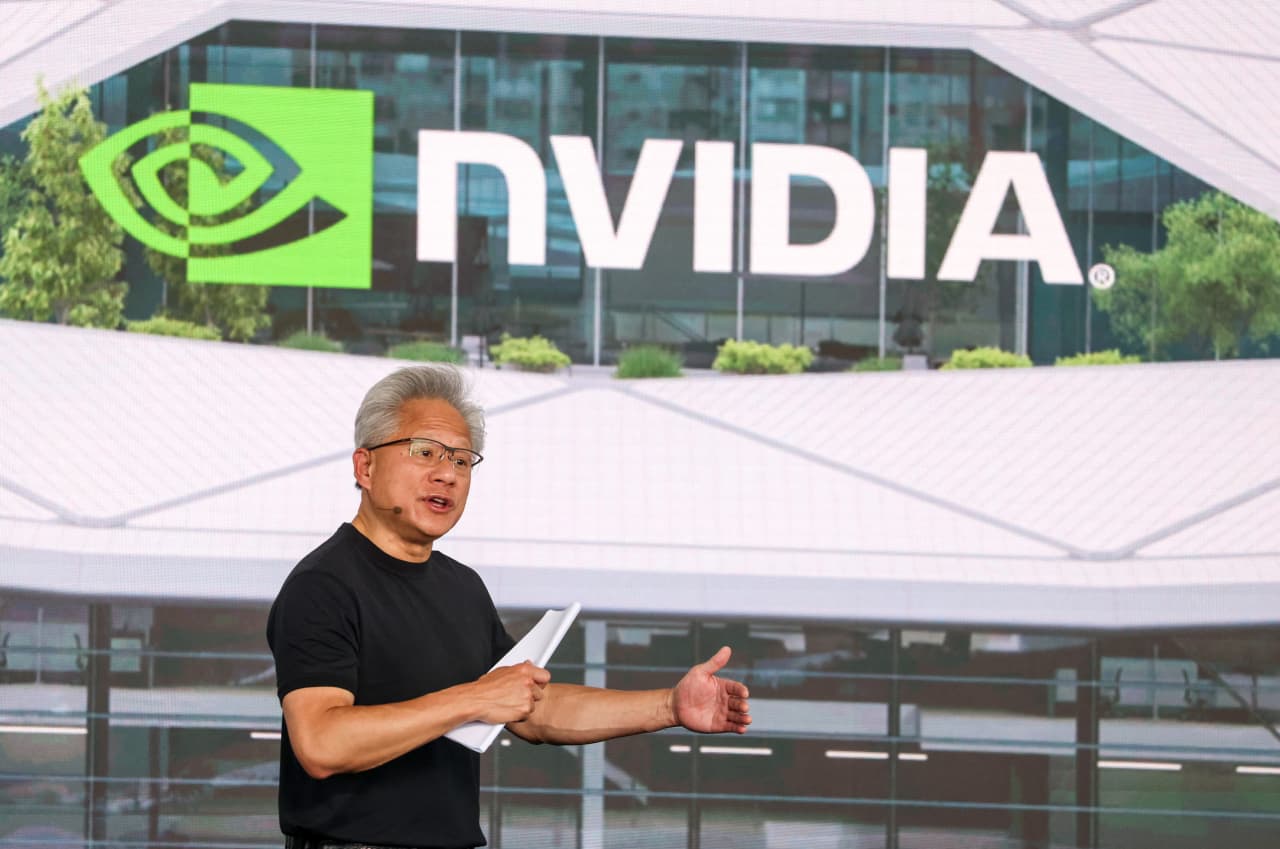
Nvidia CEO Jensen Huang's business contacts and the Megaspeed case expose limits in current U.S. restrictions on advanced computing. Experts say the rules focus heavily on chip shipments while leaving cloud-based access less constrained.
8:30 AMMarketWatchAI agents from startups including Dazzle, Duckbill and Wajo still depend on human workers for phone calls and other real-world tasks when software cannot complete them.
8:00 AMCNBC
Productivity has risen while employment has fallen in the technology sector, offering a possible early sign that AI is changing labour demand. The broader employment picture remains mixed, with no clear evidence yet of comparable effects across other sectors.
1:00 AMFinancial TimesSummary
OpenAI has reduced its fundraising target, while S&P Global changed its outlook on Meta from stable to negative. The warning reflects concerns about Meta's cash flow, spending and ability to monetize its AI investments.
Investor scrutiny is shifting from AI ambition to financial discipline. OpenAI faces pressure to raise
Unlock the full First Pass Analysis to get a better understanding of why this story mattersWhy it matters
The AI boom is beginning to face the financing and monetization tests that determine which companies can sustain it.
Summary
Recent earnings from major technology companies failed to resolve doubts about the scale and payoff of artificial intelligence spending. Instead, they reinforced concerns that lofty valuations depend on investment that may not generate returns quickly enough.
The market is shifting from rewarding AI investment to demanding proof of cash-flow returns. That
Unlock the full First Pass Analysis to get a better understanding of why this story mattersWhy it matters
AI skepticism is becoming a valuation and market-concentration risk, not just a debate about technology.
Summary
Five major technology companies could spend as much as $828 billion on AI infrastructure this year. The spending is consuming cash flow and has helped erase roughly $1 trillion in market value as investors question whether future returns will justify the investment.
The AI trade has shifted from excitement about demand to scrutiny of capital efficiency. Heavy
Unlock the full First Pass Analysis to get a better understanding of why this story mattersWhy it matters
The market is repricing AI growth around cash generation, making infrastructure economics as important as model performance.
Summary
Google's AI Overviews are forcing investors to confront whether conversational answers will strengthen search or undermine its core business. The change could alter how users find information and how advertisers reach them.
AI-generated answers threaten the click-based model that connects search queries to publisher traffic and advertising.
Unlock the full First Pass Analysis to get a better understanding of why this story mattersWhy it matters
Google is changing the product that funds its business, creating a direct tradeoff between better answers and fewer monetizable clicks.
Summary
Nvidia CEO Jensen Huang's business contacts and the Megaspeed case expose limits in current U.S. restrictions on advanced computing. Experts say the rules focus heavily on chip shipments while leaving cloud-based access less constrained.
The decisive gap is that China may reach advanced computing through cloud services even when
Unlock the full First Pass Analysis to get a better understanding of why this story mattersWhy it matters
Export controls can lose force if restricted capabilities remain available through overseas or cloud-based computing.
Summary
AI agents from startups including Dazzle, Duckbill and Wajo still depend on human workers for phone calls and other real-world tasks when software cannot complete them.
The decisive limitation is operational, not conversational: these agents can manage software workflows but still
Unlock the full First Pass Analysis to get a better understanding of why this story mattersWhy it matters
The cost and scalability of AI agents depend on how often they need human intervention.
Summary
Productivity has risen while employment has fallen in the technology sector, offering a possible early sign that AI is changing labour demand. The broader employment picture remains mixed, with no clear evidence yet of comparable effects across other sectors.
The clearest shift is concentrated in tech, where higher output is coinciding with fewer jobs.
Unlock the full First Pass Analysis to get a better understanding of why this story mattersWhy it matters
If the tech pattern broadens, AI could raise productivity while weakening demand for skilled workers in some occupations.
A curated list of other prominent stories from this day.

Data-centre companies that are little known outside the industry are carrying tens of billions of pounds in debt to support AI infrastructure. Their borrowing is adding to concerns that the AI boom may be built on fragile financial foundations.
9:37 PMBBC
Anthropic has updated Claude Opus to stop it from generating game clones, a trend that has recently filled platforms such as Steam. The move targets AI-made knockoffs that mimic existing games too closely.
5:46 PMIGN
Apple’s new CEO defended the company’s measured approach to artificial intelligence, arguing that it should not release AI features simply to match competitors. The company is prioritizing products with a clear user benefit over rapid, highly visible AI launches.
5:41 PMTechCrunch
Meta is preparing a Muse Charm, a wearable device designed to give users a cute, portable AI companion. The article contrasts Meta's product with an earlier homemade version of an AI Tamagotchi.
12:05 PMThe Verge
A new Windows 11 Insider build makes Xbox gaming mode more useful, letting players adjust Bluetooth, Wi-Fi, and power settings without leaving their game. Search is getting a broader overhaul too, with filters for files, actions, and web results.
11:12 AMThe VergeFord, Rivian and GM are expanding 3D printing beyond prototypes to produce factory tools and low-volume parts. The technology can shorten development timelines and reduce production costs.
8:00 AMCNBC
AI assistants are moving from answering questions to taking actions on a user's behalf. The central governance issue is whether organizations have clear rules for granting permission, limiting authority and assigning responsibility for those actions.
8:00 AMFortune
A company replaced several lower-paid marketing roles with one more highly paid employee who used AI agents to handle a broader workload. The experience argues against limiting employee access to AI tools because experimentation can produce larger productivity gains than tightly controlled spending.
7:30 AMFortuneConcerning projections from major cloud and technology companies pushed tech stocks lower and gave the Nasdaq its first three-week losing streak since March. The selloff creates a harsher market backdrop for Anthropic if it pursues a public listing.
7:00 AMCNBCAI systems are being used on construction sites to identify hazards, but researchers say there is limited evidence that these warnings actually prevent injuries.
2:00 AMCNBCSummary
Data-centre companies that are little known outside the industry are carrying tens of billions of pounds in debt to support AI infrastructure. Their borrowing is adding to concerns that the AI boom may be built on fragile financial foundations.
The key shift is that AI expansion increasingly depends on heavily leveraged data-centre operators, not
Unlock the full First Pass Analysis to get a better understanding of why this story mattersWhy it matters
AI's financial risks may be concentrated in obscure infrastructure companies whose debt burdens are easy to overlook.
Summary
Anthropic has updated Claude Opus to stop it from generating game clones, a trend that has recently filled platforms such as Steam. The move targets AI-made knockoffs that mimic existing games too closely.
It is a notable line in the sand as generative AI moves deeper into game
Unlock the full First Pass Analysis to get a better understanding of why this story mattersWhy it matters
The update could make it harder to flood game stores with fast, AI-generated imitations.
Summary
Apple’s new CEO defended the company’s measured approach to artificial intelligence, arguing that it should not release AI features simply to match competitors. The company is prioritizing products with a clear user benefit over rapid, highly visible AI launches.
Apple is choosing product relevance over AI speed, at least publicly, as rivals race to
Unlock the full First Pass Analysis to get a better understanding of why this story mattersWhy it matters
Apple’s AI strategy will be judged less by how much it releases than by whether restraint produces products users consider meaningfully better.
Summary
Meta is preparing a Muse Charm, a wearable device designed to give users a cute, portable AI companion. The article contrasts Meta's product with an earlier homemade version of an AI Tamagotchi.
The product direction turns AI from a tool into a persistent character that users carry
Unlock the full First Pass Analysis to get a better understanding of why this story mattersWhy it matters
AI companions could become a new consumer category, but their success will depend on usefulness beyond novelty.
Summary
A new Windows 11 Insider build makes Xbox gaming mode more useful, letting players adjust Bluetooth, Wi-Fi, and power settings without leaving their game. Search is getting a broader overhaul too, with filters for files, actions, and web results.
The goal is clear: make Windows feel less like something players have to manage between
Unlock the full First Pass Analysis to get a better understanding of why this story mattersWhy it matters
Microsoft is making Windows gaming tools faster to reach and easier to use.
Summary
Ford, Rivian and GM are expanding 3D printing beyond prototypes to produce factory tools and low-volume parts. The technology can shorten development timelines and reduce production costs.
Automakers are moving 3D printing closer to routine manufacturing, not treating it as a niche
Unlock the full First Pass Analysis to get a better understanding of why this story mattersWhy it matters
More in-house 3D printing could give automakers a faster, cheaper way to build vehicles and adapt factories.
Summary
AI assistants are moving from answering questions to taking actions on a user's behalf. The central governance issue is whether organizations have clear rules for granting permission, limiting authority and assigning responsibility for those actions.
Delegating actions to an AI agent turns a software feature into an actor with practical
Unlock the full First Pass Analysis to get a better understanding of why this story mattersWhy it matters
AI agents can create real-world consequences under a user's identity, making permission design a basic control rather than an optional safeguard.
Summary
A company replaced several lower-paid marketing roles with one more highly paid employee who used AI agents to handle a broader workload. The experience argues against limiting employee access to AI tools because experimentation can produce larger productivity gains than tightly controlled spending.
AI is shifting the value of marketing labor toward judgment, orchestration, and tool fluency rather
Unlock the full First Pass Analysis to get a better understanding of why this story mattersWhy it matters
AI adoption is beginning to reshape team design, compensation, and hiring decisions rather than merely automate isolated tasks.
Summary
Concerning projections from major cloud and technology companies pushed tech stocks lower and gave the Nasdaq its first three-week losing streak since March. The selloff creates a harsher market backdrop for Anthropic if it pursues a public listing.
Investor tolerance for expensive AI growth is weakening as hyperscalers signal the scale and costs
Unlock the full First Pass Analysis to get a better understanding of why this story mattersWhy it matters
A weaker public market can make an Anthropic IPO less lucrative and force the company to prove operating leverage sooner.
Summary
AI systems are being used on construction sites to identify hazards, but researchers say there is limited evidence that these warnings actually prevent injuries.
The technology can detect risks, but detection alone has not been shown to make sites
Unlock the full First Pass Analysis to get a better understanding of why this story mattersWhy it matters
Construction firms could invest heavily in safety AI without reducing injuries unless they connect alerts to accountable action.
Make it yours
Pick your topics, set your cadence, and receive your personalized First Pass in your inbox. It’s that simple!